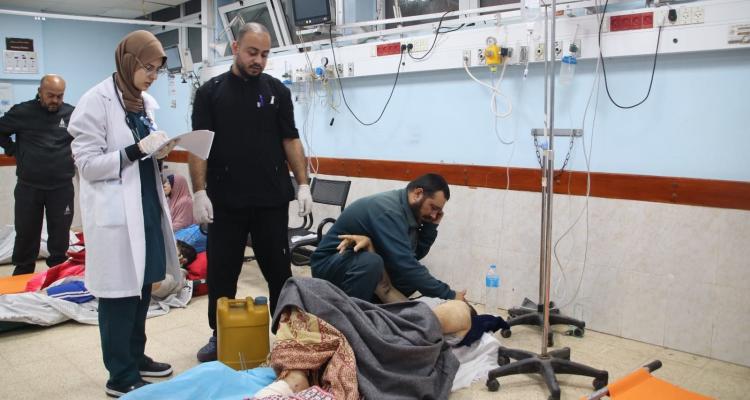
Al-Awda Hospital: We will suspend most of our services today due to fuel shortages.
131
Al-Awda Hospital in Nuseirat refugee camp (central Gaza Strip) is on the verge of halting most of its services today, Thursday, due to fuel shortages, according to Dr. Raafat Al-Majdalawi, Director General of the Al-Awda Health and Community Association.
Like other hospitals in Gaza, the hospital has been struggling to manage the fuel crisis since the beginning of the war. However, Al-Majdalawi told Al Jazeera that they are about to suspend most services later today due to the unfair distribution of diesel fuel to hospitals.
Al-Awda Hospital provides surgical, maternity, pediatric, and emergency services. It needs 2,600 liters of fuel daily, but receives only a maximum of 1,000 liters, according to Al-Majdalawi.
The Israeli occupation authorities have consistently provided fuel to Palestinian hospitals daily in quantities that do not allow for any reserves to be set aside for emergencies, while foreign hospitals receive all the fuel they need, Al-Majdalawi added.
The Palestinian doctor described this method of fuel distribution as unfair and suspicious, saying it reflects a desire to cripple local and national hospitals in favor of those run by foreign teams.
Al-Awda Hospital serves thousands of residents daily and will face a difficult, complex, if not catastrophic, situation if it cannot secure fuel in the coming hours, according to Al-Majdalawi.
He added that it will be impossible to schedule many services, such as childbirth, emergency care, accidents, injuries, and specialized surgeries.
Currently, hospital administrators are attempting to coordinate with other components of the healthcare system to transfer some cases to the hospital, but the situation in these institutions is no better, and the situation could worsen today, Friday, or at the latest Saturday, according to Majdalawi.
Since the start of the war, fuel was delivered to hospitals through the United Nations Relief and Works Agency for Palestine Refugees (UNRWA). This responsibility was then transferred to the World Health Organization, and subsequently to another UN agency. However, this latter agency confirmed to the hospitals ten days ago that it no longer has any fuel to supply them.