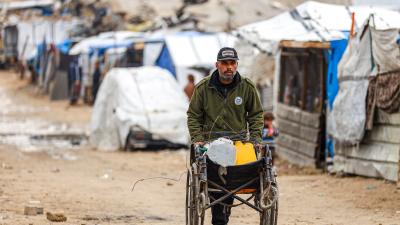
Gaza Municipality spokesperson Hosni Muhanna stated that the city has been suffering from a severe water crisis since the start of the genocidal war on October 7, 2023, due to a significant decrease in pumped water quantities. This shortage is a result of damage to the main water sources, most of which are now out of service.
Muhanna explained that the Gaza Strip relies on three main water sources: the first being the central and secondary water wells within the city (numbering 86, of which 72 were destroyed by the Israeli occupation). He noted that the second source is water from the desalination plant in the Sudaniya area (northwest), which was rendered inoperable by the Israeli occupation at the beginning of the war. Muhanna indicated that this situation has forced the Strip to rely primarily on the third source, water supplied by the Mekorot company from the occupied territories. He pointed out that the Israeli occupation controls this source by cutting off supplies or targeting the pipelines.
Muhanna confirmed that the crisis has worsened in recent days due to the shutdown of the Mekorot pipeline located in the “yellow zones” under Israeli control, as a result of damage caused by military operations. He added that the technical teams were given one day’s authorization to repair the damage, but the time was not enough, as the maintenance work needs at least three days, noting that the municipality is currently seeking a new permit.
The municipality spokesperson explained that most areas of Gaza City were affected by the disruption of this water line, noting that the water deficit, which was already around 70%, has now exceeded 90%. He pointed out that the municipality is making limited emergency efforts to deliver water (via tankers or by operating some fuel-powered wells), but this service has become an additional burden due to the increased demand. Muhanna stressed that the municipality has no other solutions, especially after the Israeli occupation destroyed approximately 150,000 meters of water networks, four main reservoirs, and municipal vehicles. He concluded by emphasizing that the only solution lies in allowing the crews to repair the damage and bringing in the necessary maintenance equipment.