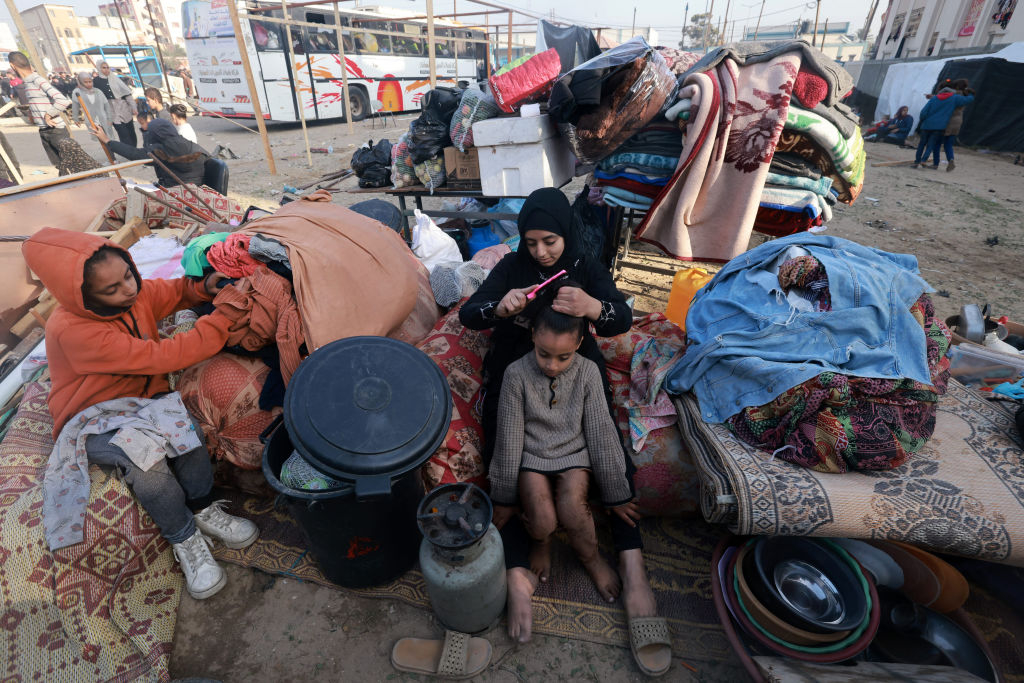
a dilapidated tent near the beach in the al-Mawasi area of southern Gaza, 22-year-old Hind tries to keep her newborn baby warm in the bitter winter cold.
Her baby was born with a severe lung infection and is still in an incubator at one of the few remaining functioning hospitals in the Gaza Strip. Hind says she weighed barely 43 kilograms when she gave birth, having suffered from severe malnutrition throughout her pregnancy. She adds that her other child, just 18 months old, is also sick due to the cold and dampness that seeps into the tent.
This story is not an isolated one, but rather representative of what thousands of women in Gaza are facing. According to a new report by Amnesty International, the devastating and multifaceted impact of what the organization describes as the ongoing genocide perpetrated by Israel in the Gaza Strip for nearly 29 months has pushed Palestinian women and girls to the brink of physical and psychological collapse.
The report indicates that the occupation policies based on intensive bombing, mass displacement, and imposing restrictions on the entry of basic aid have created harsh living conditions that threaten the survival of the population and place a double burden on women, especially pregnant women, nursing mothers, and those with chronic diseases. According to the human rights organization, women in Gaza face a complex web of crises, beginning with repeated forced mass displacement, continuing with the collapse of the reproductive, maternal, and newborn healthcare system, and culminating in the interruption of treatment for chronic diseases such as cancer, and the spread of waterborne illnesses and poor sanitation.
These conditions are further exacerbated by Israel’s ongoing restrictions on the entry of essential supplies needed for the survival of civilians, including food, medicine, medical equipment, shelter materials, water purification supplies, and materials for removing rubble and unexploded ordnance.
The organization’s Secretary-General, Agnès Callamard, says that women in Gaza are paying a heavy price for the ongoing war, noting that the lives of many have become “a daily struggle for survival amidst an endless series of disasters.”
She adds that pregnant and breastfeeding women, mothers caring for young children, women with chronic illnesses or disabilities, as well as widows and displaced women who have lost their families, face dire circumstances that make even the most basic necessities of life virtually impossible.
Callamard argues that what is happening is not merely an accidental consequence of the war, but a direct result of deliberate Israeli policies that include mass forced displacement and the imposition of strict restrictions on humanitarian aid and basic su