Between displacement and destruction… how do autistic children live in the Gaza Strip?
57
As the world commemorates World Autism Awareness Day on April 2nd, families in the Gaza Strip are struggling to protect their children amidst war, displacement, and the collapse of care and rehabilitation services. These families say the challenge is no longer limited to providing treatment or rehabilitation support, but has become a daily struggle to secure even the most basic safety and stability.
In this context, our correspondent in Gaza visited several of these families and closely observed their suffering and the escalating challenges they face, especially given the ongoing war and its repercussions.
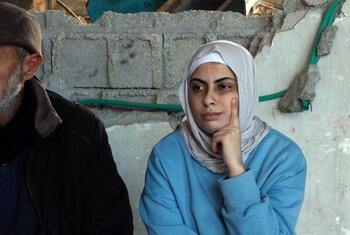
In the Sheikh Radwan neighborhood, north of Gaza City, 16-year-old Lian Abu Qousa, who has autism, lives with her family amidst the rubble of their destroyed home. Her family says the conditions have exacerbated the daily challenges related to her condition.
Hammad Qousa says that even before the war, his daughter needed regular medical and rehabilitation care, but the economic situation and scarcity of resources in Gaza prevented the family from securing this support.
He stated: “Even before the war on the Gaza Strip, my daughter Lian needed a medical treatment program, in addition to a rehabilitation program. But the limited operational capabilities in Gaza, along with the family’s financial hardship, prevented us from meeting Lian’s needs.”
In a similar case, Islam Shamali says the war disrupted the treatment of her autistic son, Yahya, who had been making significant progress before the war, but whose condition deteriorated after it began. Shamali stated that her son had been receiving follow-up care at specialized centers before the war, and that the family had also sought treatment for him in Egypt, where his condition improved considerably.
She said, “Before the war, Yahya attended specialized centers and followed up with doctors. We traveled to Egypt for treatment, and there his condition improved significantly.”
Experts indicate that the war exacerbated an existing crisis in the care of children with autism in Gaza, where the sector already suffered from a shortage of qualified professionals and inadequate rehabilitation and support services for this group.
Reem Jaarour, head of autism programs at the Dolphin Association for Education and Community Development, said: “Even before the war, we were already struggling with a lack of doctors and specialists, as well as a scarcity of care and rehabilitation centers. There were already numerous challenges even before the war; how much more so now?”
She added that during the war, many families were forced to compensate for the absence of specialists, despite lacking the necessary tools and expertise.
Jaarour explained: “During the war, parents found themselves compelled to assume the roles of supporter, caregiver, and even specialist. The situation was extremely difficult for them, as not all parents were qualified or capable of dealing with their children in this way.”