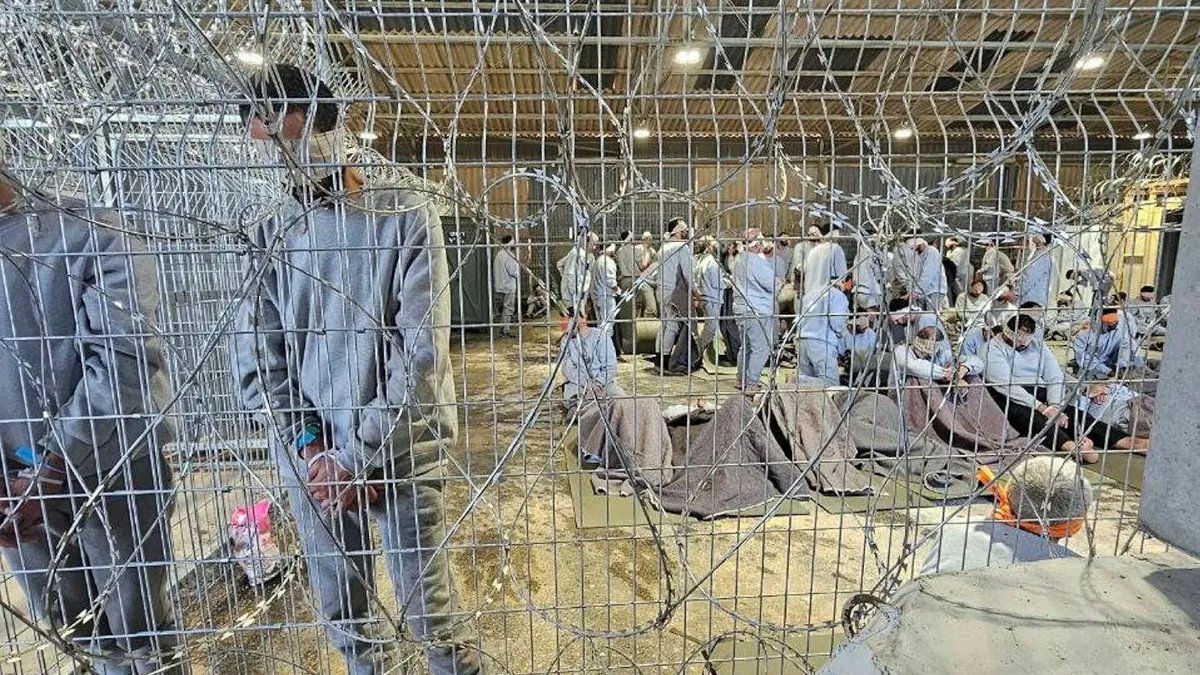
Palestinian Prisoners’ Day 2026: Israeli Prisons Impose the Death Penalty and Brutal Torture
337
The memory of the Palestinian Prisoner’s Day does not pass this year, like other years, but is burdened with shocking facts and dangerous transformations that affect the essence of the prisoners’ issue. At a time when violations are escalating inside prisons, a new reality imposes its most prominent title: the transition from the practices of repression to its legalization, to the legislation that opens the door to the execution of prisoners. And between increasing numbers and escalating human rights warnings, thousands of prisoners stand in front of a stage described as the most dangerous in decades, as the danger is no longer confined to prison, but rather by the prospects of death, which are now looming as a legal option. For many years, the policies of torture, medical negligence and starvation have been steady in the reality of Palestinian prisoners in prisons. However, the current stage indicates a qualitative and dangerous shift, which is the transfer of these policies from practice to legislation. The Knesset’s endorsement of what is known as the “prisoners’ execution law” does not seem to be a fleeting legal move, but rather reflects a political orientation towards legitimizing murder and giving the judicial institution a cover for its implementation. Thus, violations are no longer just acts committed in the shadows, but are finding their way to the legal texts, in a scene that foreshadows an unprecedented stage of escalation in prisons. The data issued by the competent institutions reflect a bleak picture of the reality of the Palestinian prisoners, as their number exceeded 9,600, until the beginning of April 2026, with a sharp rise compared to the period preceding the war. This increase not only expresses the expansion of the arrest campaigns, but also reveals a systematic policy of various groups, including women and children. In light of this reality, the administrative detention crisis is deepening, with a large number of prisoners languishing without charges or trials, which turns prisons into an open space for arbitrary detention, and makes justice an absent concept in the lives of thousands of Palestinian families.