
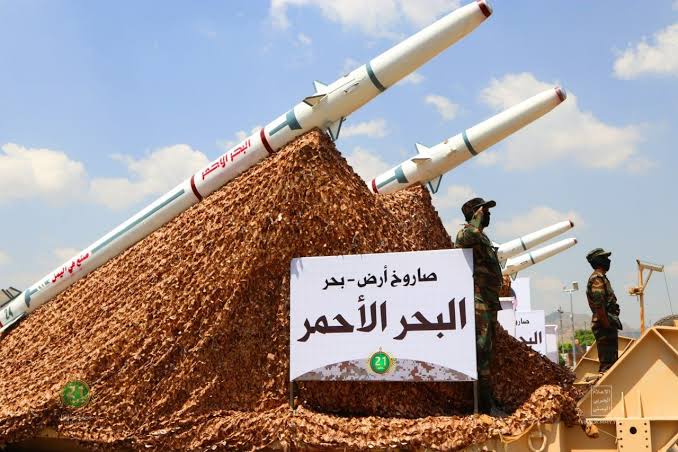
One month of the Yemeni naval blockade on Saudi Arabia… Does the “High cost” strategy open the horizon for resolution?
With the completion of the first month of the naval blockade imposed by the Yemeni Armed Forces on Saudi Arabia on July 20, the results reveal a notable upward trajectory in the impacts of this blockade on Saudi navigation in general, and on Yanbu oil exports in particular. It is evident that Sana’a designed the “blockade and escalation” equations with precision and success to achieve this, aiming to secure strong control over the course and rhythm of the confrontation in line with the desired final and decisive outcomes.
Dherar Al-Tayyeb – Al-Khabar Al-Yemeni:
The following report reviews the most prominent manifestations of the escalating impact of the Yemeni naval blockade on Saudi Arabia over the last two weeks (until August 19), complementing what was presented and analyzed in the previous two-week report:
Impact on Saudi Navigation:
Saudi cargo ships and oil tankers continued to avoid crossing the Bab Al-Mandeb Strait and sailed around the Cape of Good Hope during the last two weeks of the first month of the Yemeni blockade on the Kingdom. Navigation tracking data on August 13 showed a fleet of 12 Saudi ships and tankers sailing around Africa, after several attempts to change and hide destinations on the Automatic Identification System.
The Yemeni Armed Forces announced that the total of targeted Saudi ships until August 19 reached eight oil tankers, targeted in the Red Sea, the Gulf of Aden, and the Arabian Sea, indicating that 48 other Saudi tankers changed course.
Reports indicated that Saudi navigation in the Red Sea has become primarily dependent on concealment tactics and rerouting ships and shipments due to the Yemeni blockade, noting that the most active tactics involve combining the switching off of identification devices, hiding destinations, and using the Suez Canal and the Cape of Good Hope instead of the Bab Al-Mandeb Strait.
The transformation of these tactics into a “new normal” is a clear success for the naval blockade imposed by the Yemeni Armed Forces on the Kingdom in its first phase, which appears to have targeted specifically depriving Saudi-owned ships and tankers of using the Bab Al-Mandeb Strait.
However, on August 5, the Yemeni Armed Forces announced the targeting of the Saudi oil ship “Wafa” in the northern Red Sea, stating that they would escalate strikes on Saudi tankers in the northern part of the waterway “to close all passages on it,” clearly indicating that Sana’a retains options to expand the scope of the blockade, whether in terms of the geographical scope of operations or the categories of targeted ships.
Reports have warned that the expansion of Yemeni attacks northward will significantly undermine the tactics relied upon by Saudi navigation. The maritime intelligence company “Windward” stated that this development “will make rerouting, which is the last remaining mitigation strategy for Saudi-linked shipping, insufficient.”
Despite the low intensity of attacks against Saudi ships in the northern Red Sea, Saudi-linked navigation has shown a clear impact, with ship visits to Yanbu port declining, and the entire port movement becoming dependent on concealment (turning off Automatic Identification Systems).
A new assessment by the British maritime security company “Ambrey” considered that “Saudi Red Sea ports are vulnerable to attack by the Houthis,” an assessment that is difficult for the shipping sector to ignore, especially after the Joint War Committee for the insurance sector expanded the high-risk area in the Red Sea to include most of the Saudi coast.
In addition to the expansion of the geographical scope of the Yemeni naval blockade operations and impacts, indicators of the impact on foreign navigation linked to Saudi Arabia have increased, despite the Armed Forces’ attacks being limited so far to oil ships owned by Riyadh and flying the Saudi flag. Reports indicated that South Korea is moving towards relying on loading Saudi crude oil from the Egyptian port of Sidi Kerir on the Mediterranean Sea and transporting it via the Cape of Good Hope route, instead of sailing directly to Saudi Arabia through the Bab Al-Mandeb Strait, in order to prioritize safety.
Japan’s second-largest oil refinery announced it was taking the same step, while Reuters revealed that China’s giant shipping companies COSCO and China Merchants have completely stopped sending supertankers through Bab Al-Mandeb. This undermines the propaganda that claimed over the past two weeks that China had obtained special privileges from Sana’a to continue dealing with Saudi ports.
Ambrey has reiterated that ships and companies dealing with Saudi ports remain exposed to high risks, warning of a repeat of the same escalating blockade system that Sana’a applied to Israel over the past two years.
These indicators show that the shipping sector is preparing in advance to respond to the escalation in the degree and scope of the Yemeni blockade on Saudi Arabia, meaning that the market is treating the blockade as a new normal and does not pin its hopes on any Saudi or international measures to break or forcibly stop this blockade.
A New Category of Ships on the Target List:
The targeting of the ship “Tihama” in the Bab Al-Mandeb Strait on August 11 represented a significant development due to the scale of damage inflicted on the ship. However, this development was not directly related to the blockade imposed on Saudi Arabia, as the ship was not commercial in nature, as evidence suggests. Lloyd’s List reported that it was carrying weapons for Saudi-backed forces, supported by its constant covert activity and misleading ownership and management data.
Open sources later revealed that the company owning the ship is involved in supporting the forces of the so-called “National Resistance” led by Tareq Saleh.
Nevertheless, following this attack, Ambrey included ships transporting military equipment or dual-use materials to Yemeni ports under the control of Saudi agents as likely targets.
Just a week later, the Armed Forces announced the targeting and destruction of a military landing ship off Al-Mokha. Open-source information indicated that the ship is owned by a Yemeni businessman who runs a company involved in building military projects funded by the UAE in the Bab Al-Mandeb Strait and the western coast, including the port project where the ship was docked in Bab Al-Mandeb.
This development indicates that the Red Sea arena remains open to different data. The destruction of more ships linked to coalition-related military activities will make shipping and insurance companies more cautious about any connections to the Kingdom and its ports.
Overall, the navigational impacts of the Yemeni naval blockade on Saudi Arabia in its first month reflect Sana’a’s clear ability to achieve concentrated, immediate, and large-scale damage without the need for a large tally of destroyed ships. This means it has succeeded in imposing its own naval sanctions regime as a fait accompli, without waiting for recognition from the Saudis or others.
Saudi Arabia: An Unsafe Destination:
Naturally, the impact of the Yemeni naval blockade on Saudi navigation reflects a change in policymakers’ view of Saudi Arabia in the shipping sector. This view is primarily shaped by insurance companies that determine the level of risk associated with destinations and navigation routes, and the premiums resulting from these risks.
We have previously explained that the response of marine insurance companies to the Yemeni blockade was immediate and escalated rapidly, in favor of entrenching the Yemeni naval sanctions regime as a fait accompli. This response has reached the point of expanding the high-risk area in the Red Sea to include most of the Saudi coast, including Jeddah and Yanbu ports, leading to a significant increase in war risk insurance premiums for voyages linked to these ports.
In the last week, several insurance companies announced the cancellation of war risk coverage for voyages crossing risk areas in the Red Sea, the Gulf of Aden, and the Bab Al-Mandeb Strait. Lloyd’s List reported that there is a “comprehensive exclusion for Saudi-linked ships” from a new program for war risk coverage in the Red Sea, reflecting a continuous and escalating response to the Yemeni naval blockade, as companies appear to be seeking to preempt the exposure of Saudi-linked ships to severe damage, which could result in large compensation claims.
This response proves that Saudi Arabia’s announcement of forming a naval coalition did not succeed in changing the assessments of shipping and insurance companies regarding the risks associated with Saudi-linked ports and navigation. In fact, it may have had a reverse effect, as the market now knows from experience that any military intervention to force Sana’a to lift a naval blockade is likely to fuel further escalation and expand the scope and severity of this blockade.
Strangling Yanbu’s Oil Exports:
Saudi oil export movement served as a clear mirror for the rapid accumulation and escalation of the Yemeni naval blockade’s impacts during its first month. By the third week of the blockade, data from leading tracking companies showed that the decline in Yanbu port exports, which had become the main outlet for Saudi oil exports since the closure of the Strait of Hormuz, far exceeded the estimated percentages of the previous two weeks, which ranged between 30 and 40%.
According to Kpler data, Yanbu oil exports fell by about 56% in the week beginning August 3, from 4.04 million barrels per day to 1.78 million barrels per day.
According to Vortexa data, the decline in Yanbu exports during the first three weeks of the blockade reached more than 52%, from about 5 million barrels per day to 2.38 barrels per day, meaning a loss of 2.62 million barrels per day.
The varying estimates of current export volumes are due to difficulties in monitoring actual loading operations at Yanbu port, because all tankers are turning off their AIS devices to reduce the risks of exposure to Yemeni sanctions and attacks.
It is clear that Saudi Arabia is trying to rely on covert tanker movement to pass more exports and mitigate the blockade’s effects. However, data indicates that this method achieves only limited results. Most tankers that covertly load at Yanbu port transport the oil to the Egyptian port of Ain Sokhna on the Red Sea for pumping through the SUMED pipeline northward, because most buyers have become keen to avoid loading at Saudi ports, as is evident.
In this context, Vortexa data shows that oil exports from Sidi Kerir port rose by about 830,000 barrels per day during the first three weeks of the blockade. Since Saudi oil exports represent 90% of this figure, this indicates the volume of additional shipments that Saudi Arabia attempted to pass through the pipeline to mitigate the effects of the Yemeni blockade does not even reach 750,000 barrels per day, leaving about 1.9 million barrels per day in the export deficit.
It is unlikely that this deficit will be effectively alleviated through the remaining shipments covertly loaded from Yanbu port and transported via the Suez Canal. These voyages are rare because they are high-risk and subject to stringent insurance restrictions entailing extremely high costs. Additionally, Suez Canal restrictions prevent the passage of fully loaded supertankers, meaning the benefit of these voyages is low compared to their risks and costs.
Bloomberg revealed days ago that Asian refineries refused to receive oil shipments scheduled for next September from Yanbu port on the Red Sea, due to the difficulty of finding ships willing to bear the high risks associated with the Yemeni naval blockade. The agency indicated that some refineries requested Aramco to load shipments from the Egyptian port of Sidi Kerir, but the Saudi company does not offer this option to everyone. This also illustrates that the volume of additional flows being pumped to the Egyptian port is very limited, and the company is trying hard to prevent Yanbu port from becoming deserted.
In parallel, Reuters revealed that Aramco offered Asian customers the loading of September oil shipments from ships located off the UAE’s Fujairah, outside the Strait of Hormuz, reflecting the escalating pressure of declining Red Sea exports on the Kingdom to the point of resorting to desperate solutions it was previously free from.
Aramco’s Reliability on the Line:
The growing decline in oil exports will undoubtedly lead to full storage tanks and consequently production cuts, a serious impact because even if Saudi Arabia finds ways to pass more barrels, restoring production levels takes longer. Additionally, shaken customer confidence in Aramco and the continuity of its Red Sea flows, and their tendency to seek alternatives, will significantly and long-term exacerbate the problem.
Just three weeks after market warnings that the Yemeni naval blockade could lead to a reconsideration of the viability of relying on Saudi oil flows from Yanbu to Asia, and as a result of the sharp decline in Saudi exports, the first tangible indicators related to these warnings appeared. Aramco resorted to adopting a new sales mechanism for Asian customers, on a “case-by-case” basis, where the company selectively grants monthly allocations to customers linked to long-term contracts based on individual discussions with customers.
This mechanism places customers who have not received their allocations before serious questions about Aramco’s reliability and Yanbu flows. According to Reuters, even customers who were granted their allocations feel uncertainty about receiving shipments, making the search for alternatives more urgent for Asian buyers. The process of buying Saudi oil has become fraught with more than one challenge, from securing allocations, to ensuring shipments exit the Red Sea, to the new transport mechanism involving significant delays and high additional costs.
Bloomberg reported that some Asian refineries are considering forgoing their monthly allocations of Yanbu exports due to the high costs imposed by rerouting.
According to S&P Global, the cost of chartering a Very Large Crude Carrier (VLCC) to transport a Saudi oil shipment via the Cape of Good Hope route reached $74.8 per metric ton on August 5, compared to about $64 on the Bab Al-Mandeb route, an increase of more than $10 per metric ton (a VLCC can carry over 320,000 metric tons).
During the first two weeks of the blockade, reports indicated that Asian buyers demanded discounts of up to $10 per barrel from Aramco, considering the additional costs imposed by rerouting oil shipments from Yanbu. However, the situation developing to the point where some buyers are unable to obtain their allocations means that the option of relying on Saudi oil flows has become unsafe, even with a willingness to pay additional costs.
High Cost Sets the Pace of Confrontation:
It is clear that strangling Saudi oil exports was a primary target of the naval blockade imposed by Sana’a on the Kingdom in its first month. All Saudi ships that were subjected to attacks were oil tankers, as were all the ships Sana’a announced it had diverted.
The choice of Aramco facilities as near-exclusive targets for military response operations to Saudi airstrikes and airspace violations, so far, indicates Sana’a’s great keenness to achieve precise integration between the escalation and blockade equations, in a way that primarily serves the goal of strangling Saudi oil flows.
This integration has indeed been achieved. After the attack on August 25 caused the closure of the Aramco refinery in Jizan, with a production capacity of 400,000 barrels per day, until mid-August, a second attack carried out by the Armed Forces on August 10 caused new fires, pushing for an extension of the refinery closure for an additional two weeks.
Satellite images published on August 18 revealed additional damage to the refinery from the continuous attacks, suggesting a possible extension of the closure again.
The choice of this target reflects Sana’a’s keenness to invest in strengths in modern warfare methods it excels at, including the method of achieving large and impactful damage at a relatively low cost. The Armed Forces managed to combine the naval blockade in its broader form, including preventing and restricting Saudi navigation in general, while simultaneously strangling Saudi oil exports in particular, within a short period and in the first phase alone of the “siege-with-siege and escalation-with-escalation” equations.
Focusing primarily on strangling Saudi oil exports places Riyadh before an unbearable cost, whether for the option of comprehensive escalation, or even for the option of keeping the situation as it is. This is early control over imposing equations and managing the pace of confrontation, where it is clear that Sana’a is keen not to leave any loophole for Saudi Arabia to prolong the conflict or circumvent its reality, as happened in the “de-escalation” phase.
Saudi Arabia’s evident hesitation in using direct military options, or even the option of widely moving local agents (so far, at least), reflected clear confusion on Riyadh’s part in dealing with the high cost associated with confrontation options.
The strategy of “raising the cost on Saudi Arabia” is perfectly consistent with the logic of the new phase launched by the Yemeni leadership under the title “ending the aggression, siege, and occupation,” where there is nothing better than exploiting the nightmare of the collapse of oil trade to influence the positions of a state like Saudi Arabia.