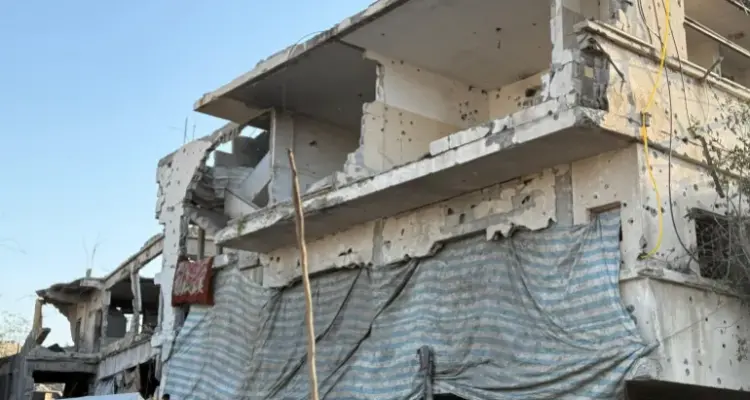
In homes weakened by bombing, thousands of Palestinians in the Gaza Strip continue to live under sloping roofs and cracked walls. The housing crisis has forced families to reside in structures they are well aware are unsafe. As winter approaches, their options appear limited: remain in unsafe places or venture into the unknown.
The Ministry of Public Works and Housing in Gaza estimates that approximately 3,000 buildings in the Strip are classified as structurally unsound and at risk of collapse, placing thousands of families under immediate threat. Residents’ testimonies reveal the extent of the predicament imposed by the war on those who lost their homes and found themselves facing meager alternatives.
In one house, it began with small stones falling in the morning, before the signs intensified during the night. An elderly man said he heard loud crashes at 3:00 AM. When he shone a flashlight on the walls, he saw the cracks widening, so he called to his neighbors to evacuate. The evacuation took only minutes, according to his account. About 18 people made it out into the street before the house collapsed. Under the rubble, they managed to salvage a few belongings, then found themselves exposed to the elements, clutching a few blankets and searching for shelter for their families.
For the man, losing his home was just the beginning of another ordeal. The family, who had shared a single roof, now had to find new accommodation. And while the need for shelter grows, the available space for families repeatedly displaced is dwindling.
In another house, a family chose to stay inside a building they knew was damaged. A young man explained that one of the pillars was damaged and the structure was uninhabitable, but the family was forced to remain there after failing to find anywhere else to live.
He noted that stones and rubble were falling from parts of the building while they were inside, and movement within the building remained dangerous. Nevertheless, the family continued to use the remaining rooms, trying to maintain a basic standard of living amidst harsh conditions.
In a neighboring house, a man watches the slightest movement of the building; when his brother moves in the upstairs room, he feels the house shake, while the movement of nearby rubble sends the family rushing outside, fearing that more pieces will fall on passersby or residents.
The man sums up his family’s predicament by saying that the remaining room has become their only refuge, even though it is uninhabitable. Having already lost family members in the war, he fears that the damaged buildings will claim more victims, describing their current location as “the only and last shelter,” which could ultimately become their grave.