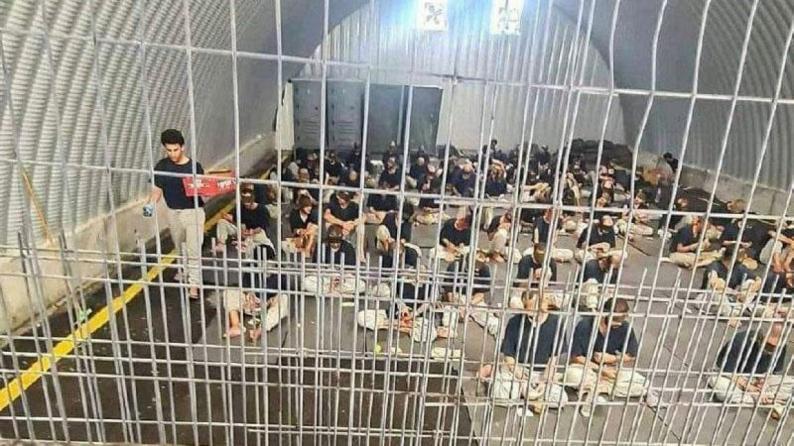
Bread on the floor and garbage in the plates… Released prisoners recount the horrors of Israeli prisons
362
Inside Israeli prisons, punishment doesn’t stop at the iron walls or the shackles; it extends to the most basic human right: food.
This is how released prisoners Ibrahim Baris and Bilal Musa described to the Palestinian Information Center the harsh reality they endured during their imprisonment before their release in the Al-Aqsa prisoner exchange. Daily meals, they explained, were transformed from a basic human need into a systematic tool of humiliation and a deliberate violation of dignity.
Released prisoner Ibrahim Baris emphasized that food in the prisons was not provided according to any health or humanitarian standards, but rather was part of a clear policy of punishment.
He added that meals were left for hours in the heat before being served to the prisoners, despite being spoiled, foul-smelling, and unfit for consumption.
He adds that protest was not an option; it was met with repression or punishment.
Breiss continues his testimony, saying that the humiliation stemmed not only from the poor quality of the food, but also from the deliberate behavior of the guards, who would enter the food containers with their feet and shoes on in front of the prisoners, sending a clear message of stripping them of their dignity before even addressing their hunger. Bread, the most basic food item, was thrown on the ground, forcing the prisoners to pick it up or leave it—a scene that encapsulated the policy of daily humiliation.
He notes that bird droppings would fall into the food containers without any attempt to remove or replace them, leaving the prisoners with only one choice: eat the contaminated food or face starvation.