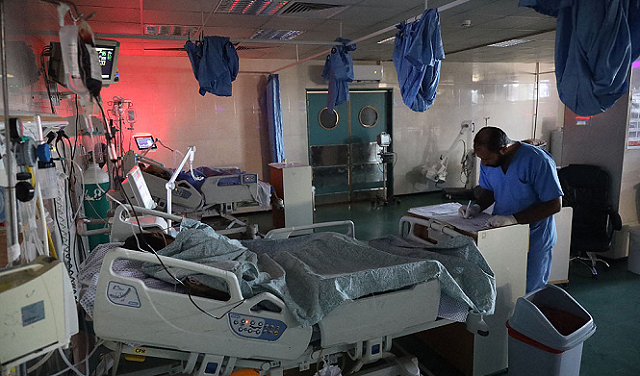
In Gaza, diseases are spreading, and treatment is based on conjecture without laboratory tests
913
The suffering of patients in the Gaza Strip is no longer limited to the shortage of medications; it has extended to something far more serious and painful: the absence of essential laboratory tests that form the cornerstone of disease diagnosis and saving lives. This comes amidst the near-total collapse of the medical testing system within hospitals and government laboratories.
Vital tests, such as a complete blood count (CBC), blood electrolytes, chemical analyses, bacterial cultures, blood bank tests, as well as tests for drug levels in the blood, and tests for endocrine and kidney transplant patients, are either completely unavailable or performed only partially and in a limited manner, leaving the lives of thousands of patients uncertain.
Near the emergency room, Umm Rama holds her seven-year-old daughter, who has lost a significant amount of weight. She says, “Rama used to be very active, but today she can barely stand. Her temperature spikes suddenly, and her blood pressure drops for no apparent reason. The doctors ordered a CBC and blood culture to check for bacteria in her blood, but the lab is unable to provide them.”
Health Ministry spokesman Khalil al-Daqran confirmed that the Gaza Strip is witnessing the most dangerous outbreak of hepatitis ever, saying: “Today we are talking about tens of thousands of infections. Official figures indicate about 70,000 cases, and perhaps more. This is an unprecedented outbreak that no society can bear.”