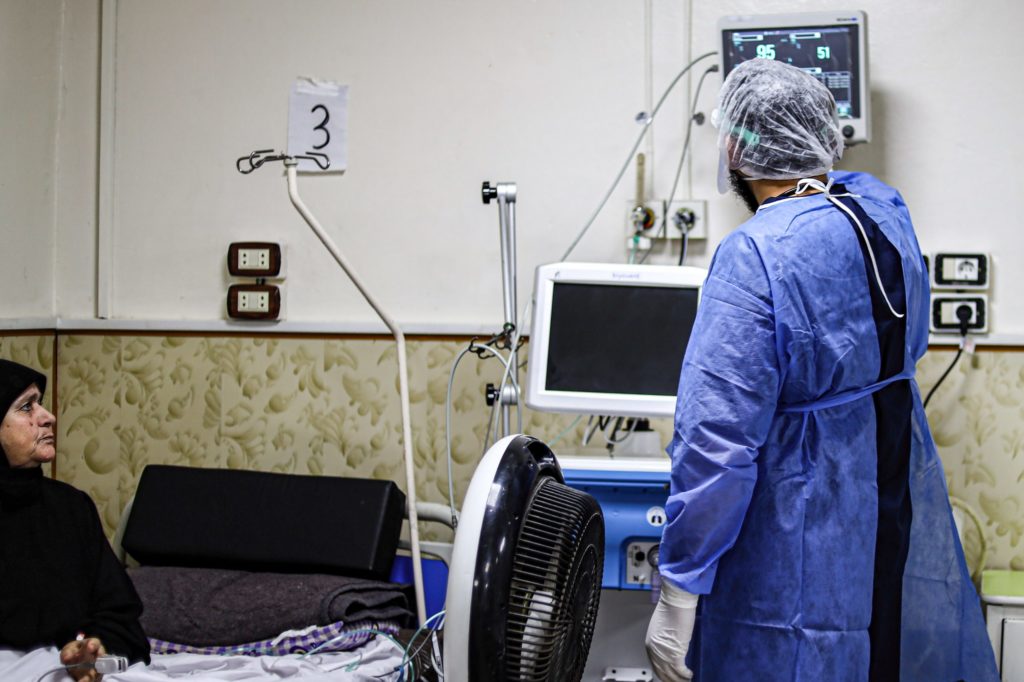
Cancer in Gaza: When the disease becomes a death sentence without treatment
1,279
Cancer in the Gaza Strip is no longer a disease that can be treated, but rather a slow, agonizing death, amidst the near-total collapse of the healthcare system due to the ongoing Israeli aggression. This aggression has destroyed hospitals, disrupted diagnostic procedures, and left thousands of patients battling the disease without medication or medical follow-up.
For over two years, cancer patients have faced an unprecedented reality. Specialized treatment centers have ceased operations, essential medications have run out, and hope has been dashed for those awaiting chemotherapy or life-saving surgical interventions.
Mahmoud Saeed was supposed to begin his first chemotherapy and surgical treatment for rectal cancer on October 8, 2023, at the Turkish Hospital, but the outbreak of the aggression prevented this.
Since then, Mahmoud has received no alternative treatment, and his health has deteriorated over time.
Saeed told our correspondent that he was diagnosed with prostate cancer a year ago and had his prostate removed, but he still relies on colostomy and urostomy bags, awaiting surgery that will allow him to resume a normal life. He adds: “All I wish for today is a medical referral outside the sector before it’s too late.”
For his part, Dr. Mohammed Abu Nada, Medical Director of the Gaza Cancer Center, says that the most significant challenges facing cancer patients are the systematic destruction of specialized hospitals, most notably the Turkish Friendship Hospital, the Gaza European Hospital, and the Abdul Aziz al-Rantisi Hospital, which has led to a near-total collapse of the diagnostic and treatment system.
Abu Nada explains that early detection equipment, such as mammograms and MRI machines, has either been destroyed or rendered inoperable due to power outages and fuel shortages, resulting in serious delays in diagnosing new cases and monitoring existing patients.
He also points to a severe shortage of chemotherapy drugs and specialized painkillers, with only about 30% of the required quantities available. This is compounded by a significant shortage of medical personnel after some were targeted during the war, and others were forced to leave the Gaza Strip.
According to the latest statistics as of the end of December 2025, the number of cancer patients in the Gaza Strip is approximately 12,500 across all age groups, with more than 2,000 new cases diagnosed annually, including 122 children, according to World Health Organization reports.
Data indicates that around 3,000 patients suffer from significant delays in diagnosis, while only 1,000 patients have been able to receive an accurate diagnosis due to a shortage of medical equipment and services.