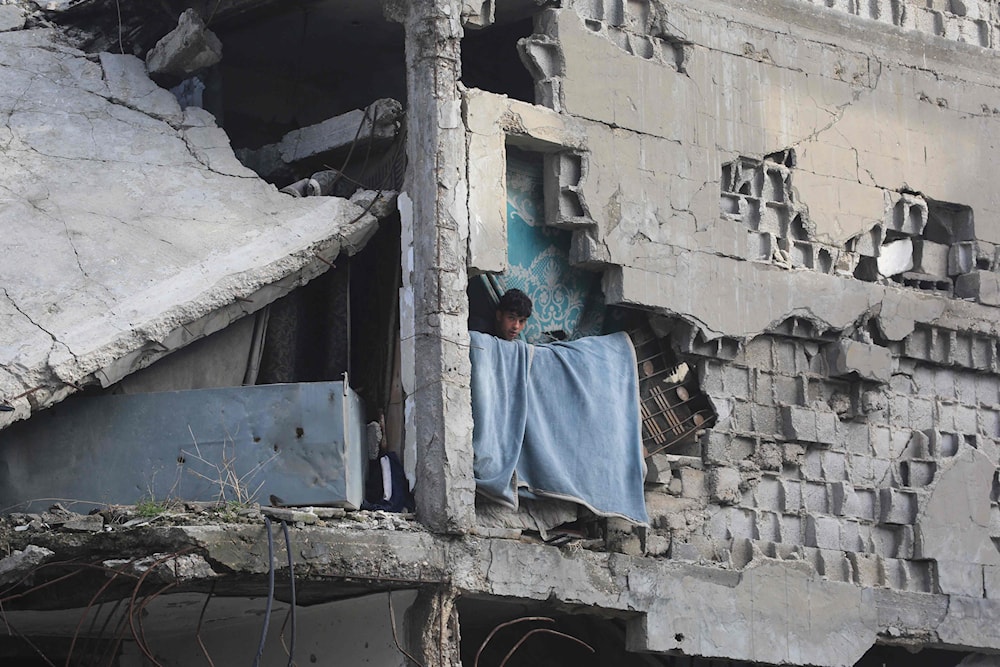
Dilapidated houses in Gaza… between the terror of living in them and the lack of alternatives
567
In Gaza, cracked houses are crumbling, and others uninhabitable are collapsing on the heads of those forced to live in them. Dozens have been killed and hundreds injured, but the bitterness of life in tents forces residents to live in makeshift shelters destroyed by the Israeli occupation army during two years of ongoing genocide in the Gaza Strip.
In a house that is no longer a home but rather a daily threat of death, Umm Muslima lives with her family after a missile struck the top floor and destroyed part of the roof of her apartment, turning it into an open-ended danger.
Umm Muslima says, “Since the engineer from the Gaza municipality came to inspect the damage, I die dozens of deaths every day from grief and anguish over what he told me.”
She adds, “He told me to leave the house immediately, describing the structural condition of the house as extremely dangerous. The engineering inspection revealed that the columns of the fifth floor are severely damaged, while two floors above our apartment are still standing without any safety guarantees. At any moment, those two floors could collapse on our heads.” Umm Muslima continues, “The danger isn’t limited to the cracked columns. Every winter, rainwater seeps in from all sides, like a river inside the house. According to the architect, this exacerbates the weakness of the concrete and accelerates erosion, because water saturation of the cement increases the likelihood of collapse, especially with the weight of two stories on top of an apartment that lacks even the most basic support.”
Despite this, Umm Muslima has no other option. Three families, a total of 12 people including children, grandchildren, and other family members, live in the small apartment. She asks, “Where can we go? It’s not easy for three families to find another place.” She points out that concrete blocks occasionally fall in the living room, and she hears a “crackling” sound at night with any nearby vibration.
She explained that she preferred living in this dilapidated house to the tent, “which does not protect from the summer heat, the winter cold, or even the rainwater that flooded many tents and destroyed the provisions, clothes, and only blankets of their inhabitants,” considering that “death is possible in both places; here it is a quick death, and there it is a slow death.”