Premature births and birth defects: disastrous consequences of Israel’s war on the Gaza Strip
812
The Israeli war on the Gaza Strip has left serious health consequences, particularly affecting the most vulnerable groups, especially pregnant women and newborns.
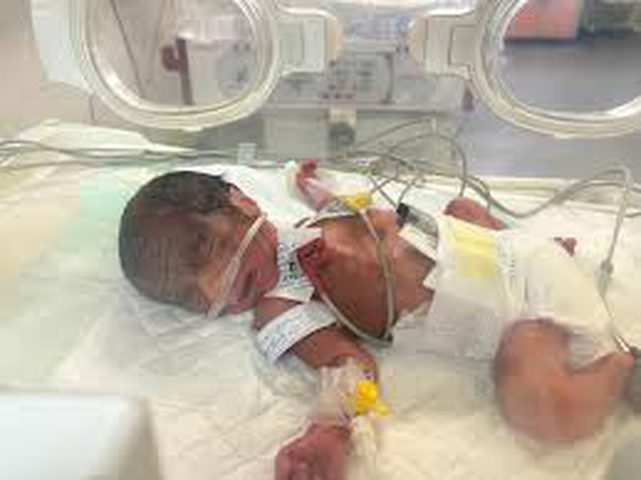
Hospitals in the Strip have recorded an unprecedented rise in premature births and low birth weights, along with a significant increase in birth defects and infant mortality, amidst a severe shortage of healthcare and widespread food insecurity.
Dr. Ziad Al-Masri, a consultant pediatrician and neonatologist at the Ministry of Health, told Al Jazeera Mubasher that most of the cases arriving at the neonatal intensive care unit at Al-Shifa Hospital are premature infants under 30 weeks old and weighing less than two kilograms. He explained that the majority of the babies they receive were born “below normal gestational age and weight,” under harsh conditions unprecedented in the Strip before the war.
Al-Masri attributed this deterioration to several factors, most notably malnutrition, water scarcity, the difficulty of providing basic necessities for pregnant women, and constant fear. He pointed out that “the fumes from the bombing and the smoke from burning wood and alternative fuels directly affect the health of the mother, and consequently, the fetus in the womb.”
He added that one of the most serious complications facing premature babies is “incomplete lung development, which forces us to keep them on ventilators for long periods,” in addition to recording malformations in the digestive system that required urgent surgical interventions, at a time when hospitals are suffering from a severe shortage of vital medicines, ventilators and broad-spectrum antibiotics.
For his part, Zaher al-Wahidi, director of the Health Information Center at the Palestinian Ministry of Health, revealed figures reflecting the scale of the disaster.
He stated that the ministry recorded more than 4,900 births of babies with low birth weights and more than 4,100 premature births before the completion of 38 weeks, an increase of over 52% compared to the year before the war.
Al-Wahidi also noted the registration of 315 cases of congenital malformations, an increase of over 56%, and a rise in infant mortality within the first week of birth by over 90%. He pointed out that more than 616 stillbirths were recorded, and more than 67% of pregnant women suffer from anemia. In light of this reality, the Ministry of Health warns of the continued repercussions of the war and the siege on the health of mothers and children, demanding the opening of crossings, especially the Rafah crossing, to allow medical evacuations and the entry of medicines and medical supplies. Data indicates that the continuation of the current situation threatens a generation suffering from long-term health consequences that could extend for years to come.