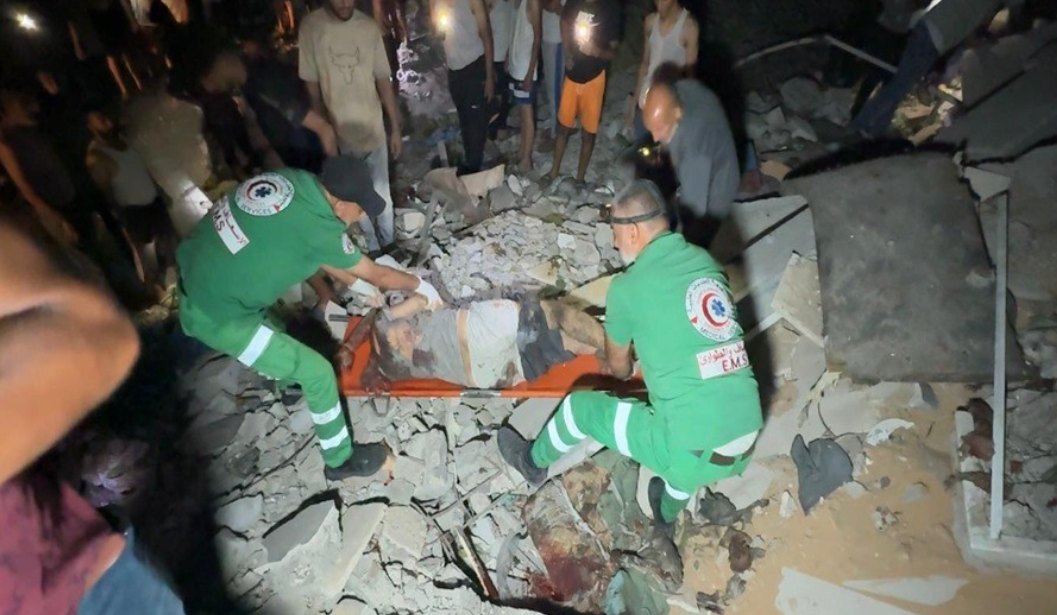
In Gaza, death doesn’t wait for an appointment. A stray bullet can turn a short journey to the cemetery, and an hour’s wait in front of a house into a final farewell. Indiscriminate Israeli gunfire is no longer an exceptional event in the lives of Gazans; it has become a daily specter haunting them in the streets, on rooftops, and even inside their bedrooms.
Recently, the occupation army has escalated its indiscriminate firing on tents of displaced people, shelters, and areas near the Green Line in various parts of the Gaza Strip, resulting in the deaths of several civilians and injuries to others.
The occupation’s indiscriminate gunfire instills fear and panic among the displaced, as if the war has never ended. They have found no safe place to seek refuge to protect their lives and the lives of their children.
The occupation has not ceased violating the ceasefire agreement since it came into effect on October 10th, committing more than 1,244 violations, resulting in the deaths of over 464 civilians, according to the Government Media Office.
Sixty-four-year-old Safia Nasman sits in front of her partially destroyed home in the Shuja’iyya neighborhood of eastern Gaza City, clutching a picture of her youngest son, Muhammad. Her voice, though composed, belies her inner turmoil: “Muhammad wasn’t a fighter, he wasn’t carrying anything. He went out a few minutes before sunset to buy bread. I heard gunfire, but I never imagined the bullet would find him and kill him.”
She adds, “When my son was hit, the Israeli soldiers were positioned relatively far away, but bullets were flying indiscriminately, as if the entire neighborhood were an open target. The bullet that killed my son wasn’t aimed at anyone, but it found its way into a mother’s heart.”
Nasman sighs before answering about the day of the incident, as if reliving the same moment. She says, “It was an ordinary day, or so I thought. Shortly before the Maghrib prayer, Muhammad told me he was going out to buy bread, so I told him to come back quickly. There were no clashes nearby, just distant sounds we were used to. I heard gunfire in the distance, but I wasn’t scared; we hear that a lot in Gaza. But after half an hour, Muhammad was late, and I felt a pang in my heart. A few minutes later, I saw the neighbors approaching, carrying him. I didn’t need anyone to tell me; I knew from their faces. He had been shot in the chest. They told me it had pierced his body quickly. There was no ambulance available, and there was no time. He died in their arms.”
The residents of Gaza live in constant anxiety, experiencing scenarios of danger before they even occur, which strains the nervous system and leads to severe psychological exhaustion.