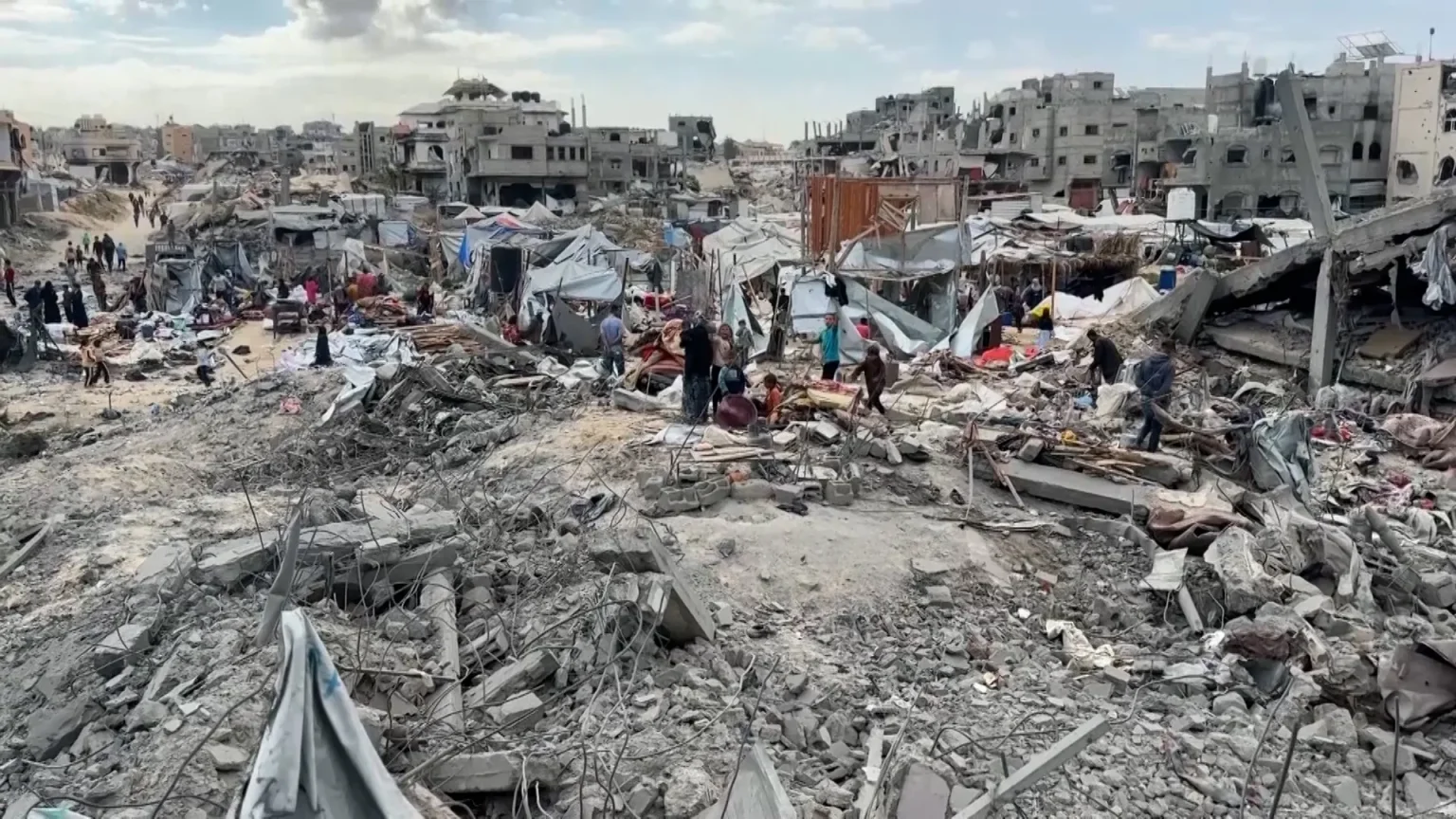
A journey to gather firewood from the midst of ruins
585
In one of the alleyways in Jabalia refugee camp in northern Gaza, erased from the map by airstrikes, Samer Safi, 42, begins his daily journey, carrying a rusty axe, a perforated plastic bag, and a silent plea to his children to wait for his return.
“I go out not knowing if I’ll come back,” Safi says, his voice devoid of drama, as if death has become a commonplace possibility, no longer worthy of emotion.
According to economic reports, firewood prices in Gaza have increased by 1500% since the last war, reaching 7-10 shekels per kilogram. A family needs about 5 kilograms a day just for cooking. With natural wood scarce in the besieged territory, small markets have emerged selling firewood made from the remains of furniture and destroyed homes.
According to the Government Media Office, the Gaza Strip normally needs between 400 and 500 tons of gas daily to meet the needs of residents, bakeries, restaurants, and hospitals. However, what has actually entered since the start of the truce does not exceed 120 to 150 tons on the best days, which is less than a third of the basic need.
Safi says, “We have flour, lentils, and canned goods, but without fire, there is nothing to eat. The children cannot bear the hunger and the cold.”
He explains, “The search for firewood often begins in the destroyed areas, in homes that have been razed to the ground, schools, mosques, and even trees that were uprooted or burned by the bombing.”
He continues, “The road to collect firewood is not safe, especially since the search is close to the positions of the occupation forces inside the Green Line. I could be shot at or shelled at any moment. The collapsed buildings are silent death traps. The danger is not only from the sky; the ground itself could swallow you up.”