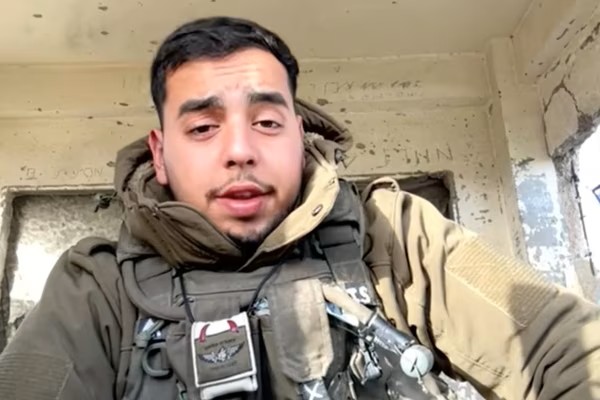
In a scene that sparked widespread shock, an Israeli soldier appeared during a live TikTok broadcast with an American YouTuber named Jeff Davidson, making serious allegations about practices he claimed were being committed against Palestinians in the Gaza Strip during the war.
The soldier, who confirmed he was currently serving in the Israeli army in the Strip, appeared amidst widespread destruction, saying, “Don’t be surprised, there are no houses here, they’ve been razed to the ground,” referring to the extent of the devastation inflicted on residential areas.
When his interviewer pointed out that Israeli forces were responsible for destroying the houses, he replied curtly, “Yes.”
During the discussion, the conversation turned to the situation of civilians, particularly children. The soldier presented a photo of a child carrying a weapon, which he claimed to have found in a house, in an attempt to justify his account of the nature of the confrontations in Gaza.
However, the discussion became heated when the YouTuber emphasized that the presence of children in a combat environment did not justify targeting them, adding that the situation in the Gaza Strip had created a tragic reality that was driving some children to take up arms. He also stressed that the presence of children could not justify targeting them or exposing them to harm.
The most alarming moment in the broadcast came when the soldier made shocking statements, saying, “We killed women and children,” before adding, “And by the way, don’t worry, we rape them too,” as documented in the widely circulated video.
These statements sparked widespread outrage on social media platforms, with activists considering them “dangerous evidence” of violations the Israeli army is accused of committing against civilians in the Gaza Strip.
Observers felt the soldier’s confidence in speaking publicly reflected, in their view, a sense of impunity.
Some social media users pointed out that the political support the Israeli government, led by Benjamin Netanyahu, receives from the United States and several Western countries contributes—in their estimation—to the lack of international accountability.
Others argued that previous incidents where perpetrators of violations were not held accountable fostered an environment that allows for the repetition of such acts.