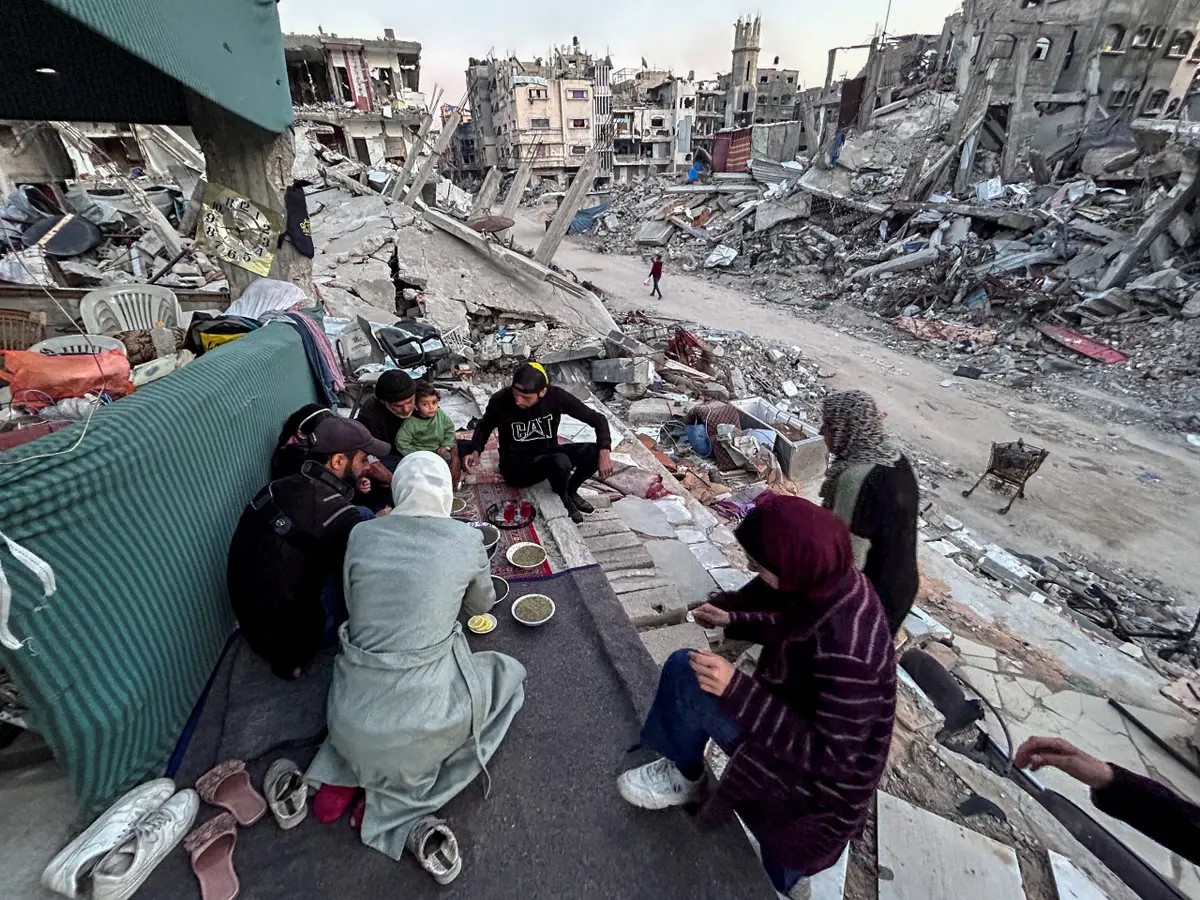
A Ramadan table in Gaza… a table that resists hunger and hides the brokenness
811
Ramadan in the Gaza Strip is no longer the festive season it once was. Instead, it has become a daily test of families’ ability to secure even the bare minimum of food amidst the harshest humanitarian and economic realities in decades.
The iftar table, traditionally associated with generosity and family gatherings, has become a stark reflection of the profound transformation that has affected every aspect of life, from the very structure of homes to the contents of the dining table.
In the displacement camps that stretch across the Strip, the image of iftar has changed drastically. Neighborhood tents have replaced homes, simple plastic tables have replaced lavish spreads, and conversations revolve less around the variety of dishes and more around a single question: how can we secure enough food to last until the next day?
Before the war, preparations for Ramadan began well in advance. Markets teemed with shoppers, shopping lists were meticulously prepared, and homes were readied to receive guests. Today, these traditions have faded in the face of the imperative to survive.
Ahmed Abu Jarbu, displaced from Rafah to Deir al-Balah, says that the Ramadan iftar table is no longer a space for joy, but rather “a daily struggle.” He explains, “Every morning I wake up wondering what we’ll eat at sunset. It’s no longer about different dishes and foods, but about a meal that will keep the children going until suhoor.”
Abu Jarbu’ used to own a legume shop in Rafah, which provided him with a stable income. But the shop was destroyed, just like his house.
He adds, “We used to sit around a table with whatever meat, chicken, or sweets we could find. Now, most days we rely on canned goods that arrive in food parcels. The difference isn’t just in the number of dishes, but in the sense of security we once had.”
In western Gaza City, Siham Miqdad lives with her family in a tent near the port. She says the soup kitchen has become essential for providing them with iftar (the meal to break the fast during Ramadan). “We stand for hours in line. Sometimes we get a meal, and sometimes we return with an empty tent, filled only with anxiety.”
Miqdad speaks of a psychological pressure that surpasses even the hunger itself. “The children ask about the foods they used to eat during Ramadan. I try to explain to them that circumstances have changed, but it’s difficult to explain helplessness to a child.”
An exhausted economy, the transformation is not limited to the individual living aspect, but rather reflects a broader collapse in the economic structure of the sector. Thousands of small enterprises were destroyed, and sources of income have stopped, while the prices of basic commodities have risen due to the scarcity of supply and the difficulty of entering the goods. The majority of families depend entirely or partially on humanitarian aid, in a scene that puts individual dignity in the face of daily need. In this context, the Ramadan trip is not just a social ritual, but a living indication of the level of poverty and food insecurity, and the size of the gap between memory and reality.