The war is not over, and hunger and disease threaten its people
96
Two months have passed since the long-awaited ceasefire, but Gaza, that small, tormented enclave, remains trapped in a cycle of seemingly intractable crises. The din of weapons has subsided somewhat, after the sounds of annihilation and killing had dominated life, but this relative calm is merely an echo of a life still groaning under the weight of its wounds.
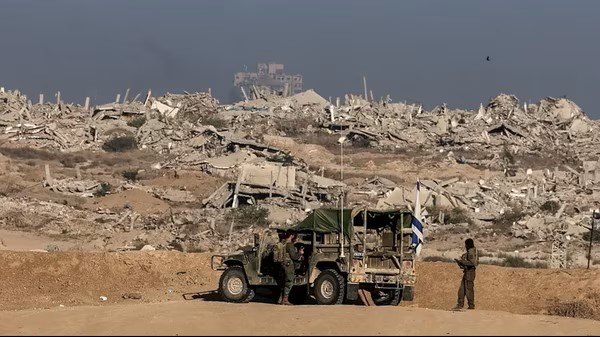
Although the war’s roar has diminished slightly, its effects are ever-present, and the clamor of every detail in Gazan life remains deafening. Destruction continues to haunt every corner and expands due to Israeli violations. Fear and sorrow still permeate the faces of those accustomed to living under a sky heavy with danger.
The devastation wrought by this war of annihilation is not limited to homes and infrastructure; it has extended to invade the very souls of people and steal even the simplest vestiges of hope. Amidst this rubble, people still search for a chance at a normal life, finding themselves trapped in circumstances that seem endless.
The streets that once teemed with life have now become desolate spaces, where people suffer from water and electricity shortages. Children struggle to access their right to education after their schools were destroyed by the war, and doctors battle to save lives amidst a severe lack of medicine and medical supplies.
Although hope has crept into some hearts following the ceasefire, reality has insisted on keeping the residents of Gaza trapped in a cycle of suffering. This is not merely the sentiment of someone sympathetic to Gaza and its people; Western media and international human rights organizations consistently document this reality.
The British newspaper The Guardian stated that despite the ceasefire announcement, the term “truce” is creating a dangerous illusion that life is returning to normal for Palestinians trapped within the remaining 42% of the Gaza Strip, the area enclosed behind the “yellow line” imposed by the occupying power.
The newspaper highlighted the continued Israeli violations of the ceasefire agreement brokered by the United States, at a time when the humanitarian crisis is worsening and misery is increasing in all aspects of life.
The newspaper emphasized that since the ceasefire was declared on October 10th through US mediation, Israeli forces have killed more than 360 Palestinians, including at least 70 children, according to a UN official.
It pointed out that although the number of fatalities has decreased compared to the previous two years, an average of seven Palestinians are still being killed daily, a rate equivalent to an active conflict in any other region of the world, according to the newspaper.
The newspaper highlighted Amnesty International’s position that the occupying power continues to commit genocide, and that the term “truce” gives a false impression of a return to normalcy in the Gaza Strip.
The British newspaper stated that Palestinians in Gaza are living through a humanitarian catastrophe with no end in sight. 2.2 million Palestinians live in only 42% of Gaza’s land area, with nine out of ten homeless, and 81% of homes destroyed or severely damaged.
Meanwhile, winter is exacerbating the tragedy, with rains flooding camps, tents collapsing, and sewage overflowing, increasing fears of disease outbreaks, according to the newspaper.
The American magazine The Nation, for its part, said that the war on the Gaza Strip has not ended, but has only changed its form. The truth is simple: Gaza has been deprived of its right to heal. The rubble remains, the sick are suffering, the prisoners have not returned to their homes, and the grip of the occupation is tightening. Any real ceasefire means opening the borders, rebuilding what was destroyed, and allowing life to return. But this is not happening. What we see is a deliberate stagnation and a disguised punishment in the form of calm.