Mud and straw houses: Necessary solutions for displaced people in Gaza’s harsh winter
100
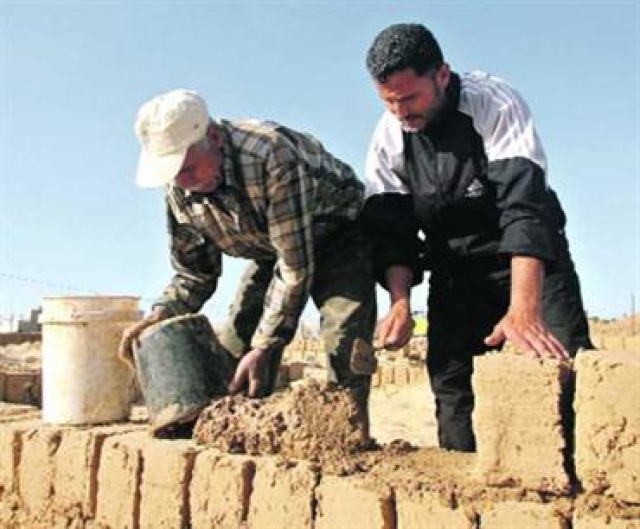
From sand, mud, and straw, a number of Palestinians in the Gaza Strip have found themselves forced to seek unconventional methods to build shelters to protect them from the harsh winter cold, which has become merciless in the tented living conditions.
In the town of Al-Zawayda in the central Gaza Strip, many displaced people faced a real challenge in finding alternative housing options, given the exorbitant prices of tents and tarpaulins, as well as the sharp rise in the prices of building materials, especially bricks and cement, which the Israeli occupation has prevented from entering the Strip for more than two years. This has led to the price of a single bag of cement exceeding 500 shekels (about $150).
Rami Abu Shanab, a resident of the town, decided to embark on a new experiment: building his first room from mud. Abu Shanab told Quds Press that at the beginning of October, he was surprised to find his tent flooded with rainwater, even though he hadn’t bought it long ago. This prompted him to think about finding an alternative that would improve his harsh reality, even if only minimally.
He adds, “The idea began with trying to build two mud walls to insulate the sides of the tent and prevent rainwater from leaking in, but the initial attempt wasn’t enough. So, I decided to reinforce the mud with straw to make it more cohesive, and the idea worked perfectly.”
As the idea developed, Abu Shanab says he was able to create two rooms, a kitchen, and a bathroom. He also covered the roof with corrugated iron sheets and reinforced it with several layers of tarpaulin to protect it from water leaks.
The success of Abu Shanab’s experiment encouraged a number of displaced families to build mud rooms as an alternative to tents, and this housing style has become remarkably widespread in the displacement areas west of the Gaza Strip.