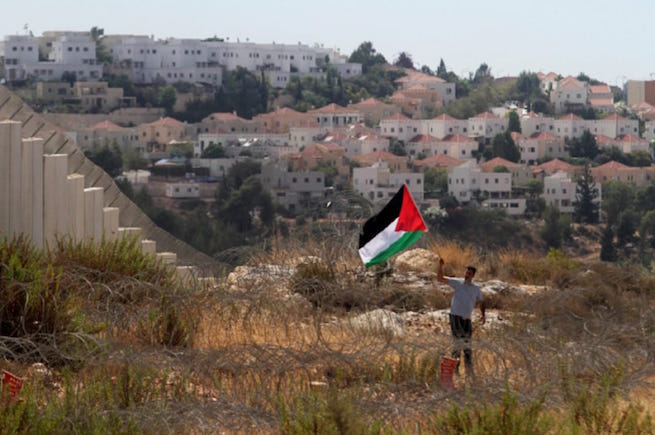
The occupation is escalating settlement activity in the West Bank at the beginning of 2026
503
The Israeli government began 2026 with an unprecedented escalation of settlement projects in the West Bank, exploiting the atmosphere surrounding the upcoming Israeli elections and the accompanying political posturing and increasing extremism, particularly from Israeli right-wing parties.
In its weekly report issued today, which monitors violations during the period from January 17 to 23, 2026, the National Bureau for Defending the Land and Resisting Settlements (affiliated with the Palestinian Authority) confirmed that this year has witnessed the occupation’s transition from the stage of decisions to the stage of actual implementation on the ground, through the expansion of settlements and the imposition of new geographical realities aimed at undermining the possibility of establishing a geographically contiguous Palestinian state.
The report indicated that Israeli government circles, particularly the so-called “Civil Administration” under Finance Minister and Settlement Minister Bezalel Smotrich, are basing their plans on coalition agreements between the Religious Zionist Party and Likud, which stipulate the establishment of 70 new settlements, most of which already exist and are awaiting retroactive legalization.
These plans focus on the Jerusalem Governorate, the northern West Bank, and the Jordan Valley, in conjunction with the repeal of the 2005 “Disengagement Law” and the expansion of existing settlements, most notably on Mount Ebal north of Nablus, and the “Date City” project in the Jordan Valley, primarily intended to accommodate ultra-Orthodox settlers.
In this context, the Israeli newspaper Yedioth Ahronoth revealed that the Israeli government has approved a large-scale plan to seize 695 dunams of land belonging to the villages of Kafr Laqif, Jinsafut, and Deir Istiya in Wadi Qana, in the northern West Bank, to establish a new settlement neighborhood near the settlement of Karnei Shomron.
The report indicated that the central objective of this move is to sever the geographical contiguity between the governorates of Salfit and Qalqilya, turning Palestinian towns into isolated enclaves, thus fundamentally undermining any possibility of establishing a viable Palestinian state.
According to the plan, the project includes the construction of approximately 5,774 new settlement units, linking the Karnei Shomron settlement to the settlements of Elkana, Etz Efraim, and Immanuel, transforming it into a central city, with the development of a comprehensive infrastructure including schools, cultural, commercial, and sports centers, public parks, and a modern road network, with investments exceeding 10 million shekels.
The report confirmed that the project creates a continuous settlement geography, which is countered by the complete fragmentation of the Palestinian geography in the region.