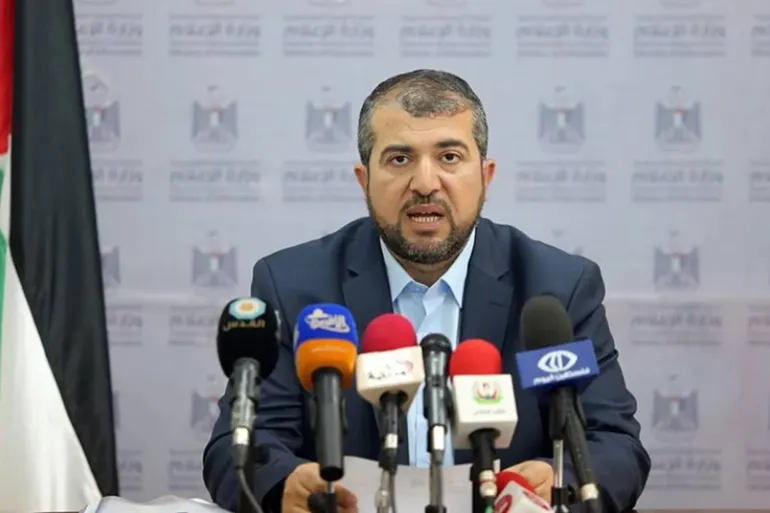
Munir al-Barsh: Gaza is facing a silent health genocide
434
The Director General of the Ministry of Health in Gaza, Munir al-Barsh, warned of a complete and unprecedented collapse in the health and humanitarian situation in the Gaza Strip. He emphasized that the Strip is experiencing one of the most tragic chapters in its history, due to the ongoing siege and war and their repercussions on the lives of residents, particularly the displaced who are facing a worsening environmental and health catastrophe after sewage flooded their temporary shelters.
In statements to Al Jazeera Mubasher’s evening program, al-Barsh said that more than 200 families are now living amidst sewage, a scene reflecting “the complete collapse of the conditions for a dignified life.” He pointed out that what is happening in Gaza cannot be described as a natural disaster, but rather a humanitarian catastrophe created by the occupation, the siege, the war, and international silence.
He added that in recent days, the Strip has witnessed the deaths of 24 people as a result of their homes collapsing due to rain, in addition to the deaths of 9 children from the extreme cold. He stressed that death in Gaza is no longer solely linked to bombing, but now also comes from hunger, cold, lack of shelter, and the absence of medicine. He continued, “The children of Gaza don’t need statements of sympathy, but rather warmth to protect their bodies and a roof over their heads.”
The Director General of the Ministry of Health highlighted what he described as the “systematic targeting of the Palestinian womb,” revealing shocking figures related to reproductive health in 2025. He stated that the Gaza Strip recorded approximately 48,000 births, including nearly 4,900 babies born with abnormal weights, more than 4,000 premature births, and over 315 documented cases of congenital malformations.
Al-Barsh noted that 616 stillbirths were recorded during the same year, emphasizing that these figures reflect the reality of “unsafe childbirth” amidst shortages of medicine, food scarcity, and the absence of basic healthcare, leading to congenital malformations and serious complications for both mothers and fetuses. Regarding the possibility of reopening the Rafah crossing, the Palestinian official expressed hope that this issue would move from repeated promises to tangible reality. He emphasized that the Ministry of Health in the Gaza Strip maintains lists of patients on an ongoing basis, as the need is not limited to individual cases but encompasses thousands of patients.
Al-Barsh stated that more than 18,500 patients urgently need to travel for treatment outside the Gaza Strip, warning that their continued inability to travel is tantamount to a “death sentence.” He noted that more than 1,022 patients have already died due to their inability to travel.