
American report exposes Gulf states and their role in the war on Iran
Follow-ups – Al-Khabar Al-Yemeni:
The Associated Press reported that a coalition of Gulf states, led by Saudi Arabia and the UAE, is exerting intense pressure on the Trump administration to continue military operations against Iran amid a regional conviction that the strikes ongoing for about a month have not sufficiently weakened Tehran.
According to the agency, Washington’s allies in the region see the current phase as a “historic” opportunity to bring about a radical change in the structure of the Iranian regime, moving beyond the state of hesitation that prevailed at the start of the war due to the lack of prior coordination for the American-Israeli attack and fears of the war’s repercussions on the stability of the region.
Officials from Saudi Arabia, the UAE, Kuwait, and Bahrain, in undisclosed consultations, affirmed the necessity of continuing military operations until achieving structural changes in the Iranian leadership or imposing a radical shift in its regional behavior.
In contrast, diplomatic sources revealed a divergence in the positions of Gulf states; Riyadh and Abu Dhabi lead the calls to intensify military pressure, with the Emirati push towards the option of a ground invasion, supported by Kuwait and Bahrain. This comes amid the escalation of Iranian attacks with missiles and drones on American bases in the Gulf.
On the other side, both the Sultanate of Oman and Qatar lean towards diplomatic solutions, based on their traditional role in mediation with Tehran.
Saudi Arabia, according to sources, adheres to strict conditions for any potential agreement, including neutralizing the Iranian nuclear program, dismantling its missile capabilities, and ending its support for allied groups in the region, along with ensuring the security of navigation in the Strait of Hormuz.
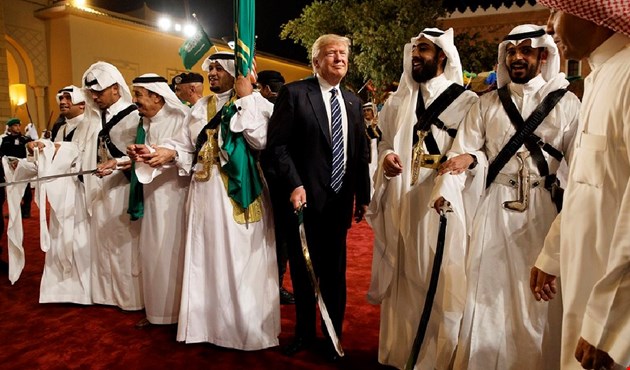
For his part, Trump affirmed the existence of broad Gulf support for his policies, praising the positions of Saudi Arabia, the UAE, Qatar, Kuwait, and Bahrain. He said in press statements that these countries are “responding strongly,” referring to their support for American efforts, even though their role is currently limited to logistical support and hosting military bases.
This comes at a time when Trump faces internal challenges to secure support for the continuation of the war, which has left thousands of casualties and affected the global economy, amid fluctuations in his statements between openness to a settlement with Tehran and threats of greater escalation.
In context, Washington has not yet requested direct military participation from Gulf states, amid fears of field complications and previous military incidents, as Iran threatens to target vital facilities in neighboring countries, raising the probabilities of the conflict expanding.
Analysts believe that the absence of a clear goal for the war, along with doubts about the extent of the US’ readiness to see it through to the end, explains the hesitation of some countries, warning that any major escalation or casualties may push these states into direct engagement in the fighting, according to the agency.