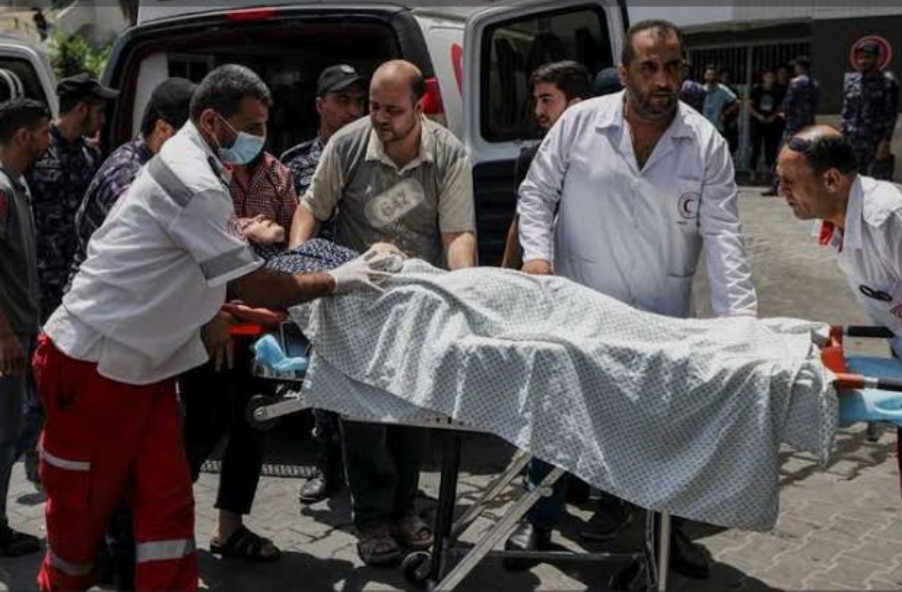
In a scene that encapsulates the depth of the humanitarian tragedy in the Gaza Strip, shocking data reveals the reality of the health system, which is no longer able to perform its most basic functions amidst an ongoing war and widespread destruction of infrastructure, human resources, and medical facilities.
As World Health Day 2026 approaches, official warnings and statistical data converge to confirm that the health sector in Gaza has gone beyond the crisis stage and entered a state of near-total collapse.
The Ministry of Health in Gaza stated that the situation in the health sector has surpassed the limits of traditional crises, reaching a catastrophic level in which the most basic human rights to health are violated. The Ministry indicated that patients are being denied treatment, while surgeries are being performed under harsh conditions lacking even the most basic safety standards.
According to the Ministry’s data, the number of martyrs has reached 72,208, while the number of wounded has exceeded 172,068, including more than 21,000 children, an indicator that reflects the immense pressure on an already exhausted health system. The shortage of medicines has reached 50%, medical supplies 57%, and laboratory testing materials 71%, threatening the immediate collapse of essential services.
Medical Sectors on the Verge of Collapse
Oncology services are among the hardest hit, suffering a 61% shortage of specialized medications. This puts approximately 4,100 cancer patients at increased risk due to the disruption of their treatment.
Primary care, neurology, nephrology, surgery, and intensive care units are also experiencing shortages exceeding 40% in essential medications.
The Ministry reported a complete halt to open-heart surgeries and cardiac catheterizations, along with a severe 89% shortage of supplies for eye surgeries. Hospital bed occupancy has decreased by more than 55%, with 22 hospitals and 90 health centers out of service.
Under these circumstances, only 108 dialysis machines are operational, serving 676 patients, while hundreds more require regular care that is now at risk of being cut off. Around 5,000 amputations were also recorded, including hundreds of children and women, all of whom need rehabilitation programs that are not available.
Data indicates that more than 21,000 patients and wounded individuals are on waiting lists for travel for treatment, including critical cases, while 1,517 patients have died while awaiting treatment outside the Gaza Strip. Health conditions have deteriorated within displacement centers, with the spread of waterborne and foodborne illnesses, exacerbated by weak health monitoring systems.
Furthermore, 83 healthcare workers remain under arrest, while the sector suffers from a severe shortage of fuel and operational supplies, threatening the collapse of what remains of services.
Statistics: 94% of Hospitals Damaged
The Palestinian Central Bureau of Statistics confirmed that the health system in Gaza is facing unprecedented and exceptional circumstances, noting that 94% of hospitals have been damaged, while only 18 out of 36 hospitals are partially operational.
It explained that primary healthcare services have declined to less than half their capacity, while only 1.5% are operating at full capacity. More than 51% of essential medicines have run out in warehouses, placing thousands of patients at serious risk.