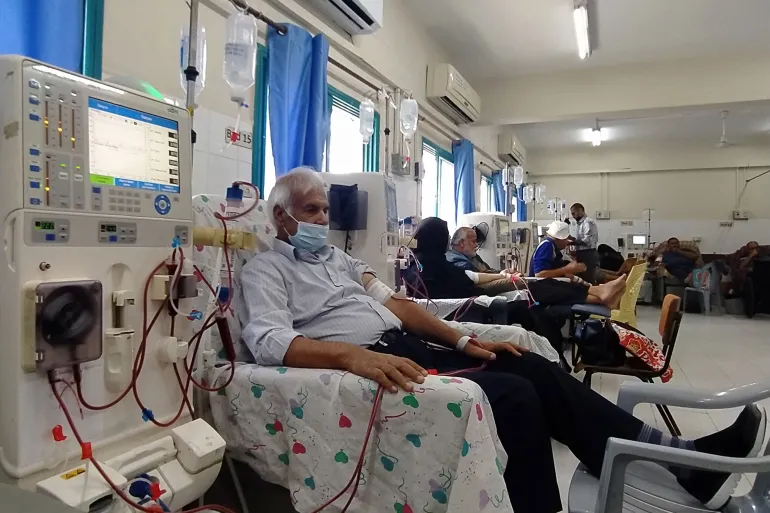
Israeli bombing and preventing medicines deepen the suffering of kidney patients in Gaza hospitals
592
Despite the ceasefire announcement, Israeli airstrikes continue to target various areas in the Gaza Strip, amid a rising death toll and an unprecedented deterioration in the humanitarian and health situation, particularly in hospitals, which are operating beyond capacity with limited resources.
In this context, medical sources at Al-Shifa Hospital in Gaza reported that Israeli artillery shelling targeted the town of Beit Lahia in the northern Gaza Strip, resulting in several injuries. This brings the total number of wounded since the ceasefire to over 1,500, while the death toll has risen to over 550, a figure expected to increase as the shelling and drone activity continue.
The sources explained that these attacks are directly impacting the humanitarian and health situation. Al-Shifa Hospital is receiving patients beyond its capacity, while the Israeli occupation authorities are preventing most patients from traveling abroad for treatment, allowing only a very limited number to leave, a number insufficient to address the critical cases requiring urgent intervention.
Regarding kidney patients, the kidney department at Al-Shifa Hospital is suffering from a severe shortage of medicines and basic medical supplies, in addition to a shortage of blood units and hormonal medicines, which leads to many patients suffering from anemia and a deterioration in their health condition, in light of the great difficulties that patients face in accessing treatment due to the lack of means of transportation.
Medical sources at Nasser Hospital in Khan Younis stated that Palestinian Ministry of Health estimates indicate that approximately 53% of essential medicines have not entered the Gaza Strip since 2023 due to the war and its aftermath.
They explained that dialysis centers in the Strip, including Nasser Medical Complex, are unable to meet the growing needs of more than 1,700 patients suffering from kidney failure, forcing medical staff to reduce dialysis sessions due to a severe shortage of resources.