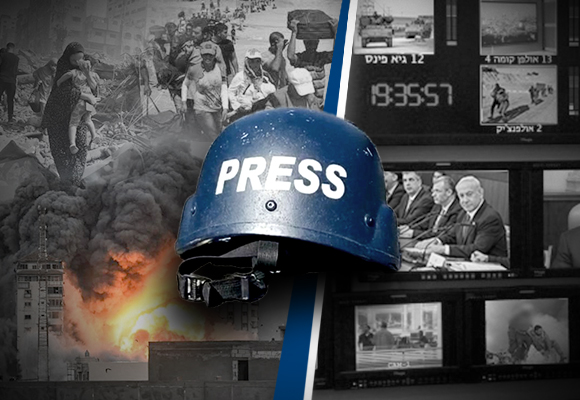
The Palestinian Media Forum calls for urgent action to break the media blockade on the Gaza Strip
553
The Palestinian Journalists Forum (an independent organization) called on Reporters Without Borders to take concrete measures and practical steps to condemn the Israeli occupation authorities’ continued obstruction of foreign journalists and international media delegations from entering the Gaza Strip.
In a statement issued Sunday, the Forum stressed the need to intensify diplomatic and legal pressure on the occupation authorities to lift their stringent restrictions, which aim to isolate Gaza from the world and suppress the truth.
In a memorandum addressed to the international organization, the Forum urged the inclusion of these systematic violations in the organization’s annual and periodic reports. It emphasized that the continued obstruction undermines the very essence of journalism and constitutes a blatant violation of the international community’s right to access independent information, free from the biased military narrative.
The memorandum reviewed the occupation’s policies of “information blackout” through the prohibition of independent coverage, describing this measure as a “compound crime.” On the one hand, it conceals the crimes committed against civilians, and on the other hand, it removes legal and regulatory oversight from the conflict zone, rendering it a lawless environment beyond the reach of international scrutiny.
She pointed out that this ban goes beyond being a mere “security measure,” constituting a systematic attempt to silence international witnesses. This violates the requirements of international humanitarian law and relevant Security Council resolutions on the protection of journalists, particularly Resolution 2222.
Since October 2023, the occupying forces, with American and European support, have waged a war of genocide against the Gaza Strip. This war, which lasted for nearly two years, resulted in the deaths of more than 72,000 Palestinians and injuries to approximately 171,000, the majority of whom were children and women. It also caused widespread destruction, affecting nearly 90% of the civilian infrastructure. The United Nations estimated the cost of reconstruction at approximately $70 billion.