Female cleaners in Gaza hospitals: We worked alongside doctors and nurses, performing men’s work
309
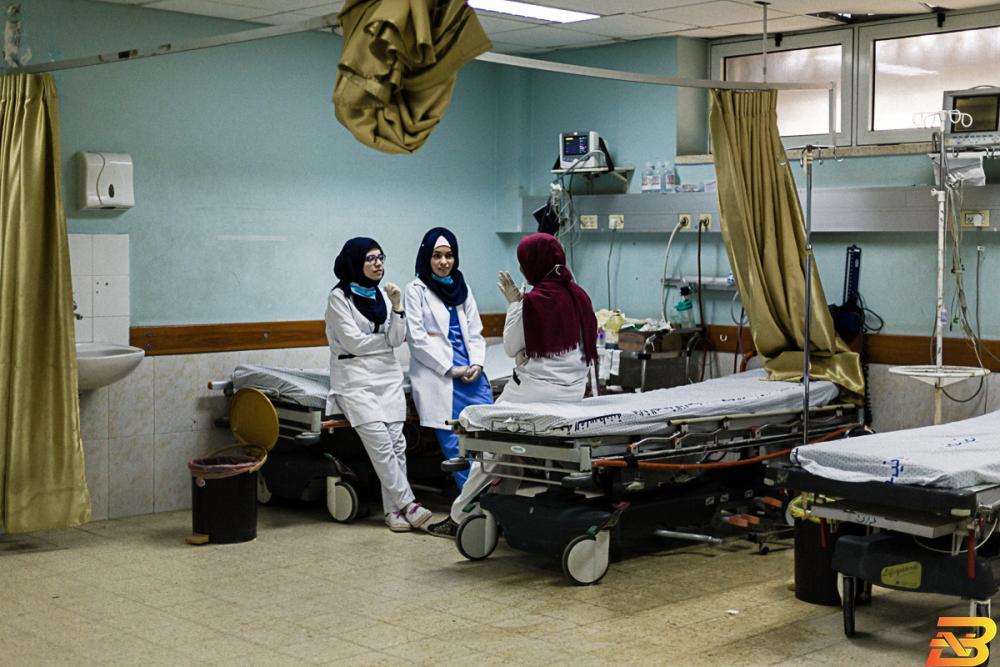
In the overcrowded corridors of Gaza’s hospitals, the burden of war’s aftermath isn’t limited to doctors and nurses. It extends to cleaning staff who find themselves on the front lines of the health and humanitarian crisis, working in harsh conditions with virtually no resources, while simultaneously bearing the weight of displacement, loss, and the cessation of income.
Ghada Zaarab, a cleaning worker at Nasser Medical Complex in Khan Younis, southern Gaza, said that the war has completely changed the nature of their work. Their role is no longer limited to cleaning; it has expanded to include multiple tasks within the hospital amidst the ongoing Israeli war of attrition against the Strip, which has lasted for more than two years.
Ghada explained to Al Jazeera Mubasher, “We were working as messengers and security guards, and we dealt with the bodies of martyrs… The pressure, both psychologically and practically, was unprecedented.” She added that the hardships of their work were compounded by displacement and harsh living conditions, placing the cleaning staff under simultaneous pressure both inside and outside the hospital. She said they worked long hours, seeing their children only briefly, while ambulances repeatedly called them back to work, even into the night.
Zarab recalled one of the most difficult moments she experienced during the war, when she found herself preparing the bodies of martyrs, only to be shocked by the arrival of her own son, also a martyr, at the same hospital. She said, “One moment I was preparing the bodies of martyrs, and then they brought my son, a martyr.”
Despite this, she affirmed her pride in her work, adding, “I am proud to be a cleaning worker… We are the makers of beauty.”
She pointed out that the cleaning staff continued working despite months of unpaid salaries, driven primarily by humanitarian concerns rather than professional obligations. She explained that searching for food became part of her daily routine after work, as she would go to aid distribution points in the mornings to obtain flour or other food for her family.