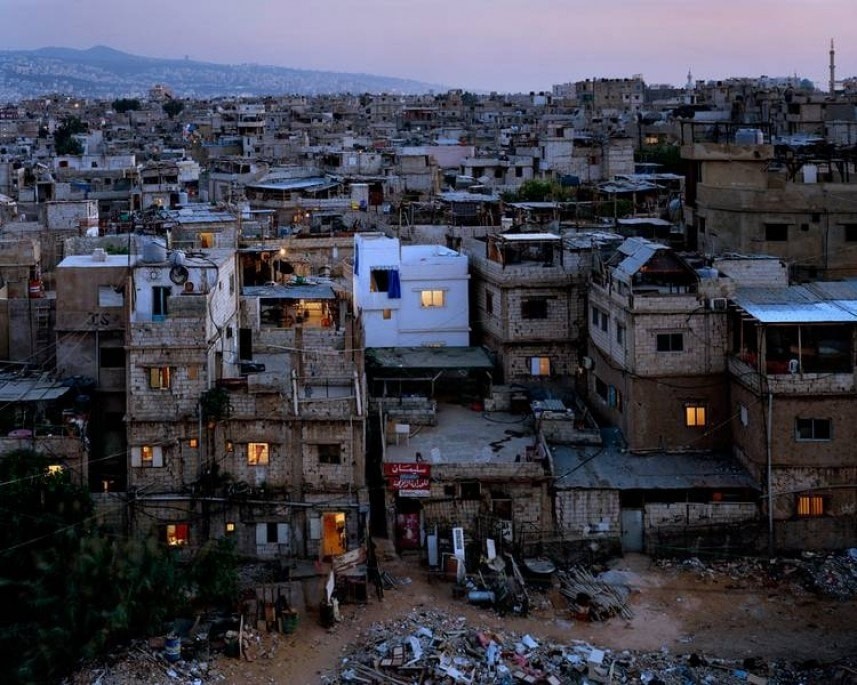
Displacement under threat… Israeli warning revives the specter of forced displacement in Burj al-Barajneh camp
617
The evacuation warning issued by the Israeli occupation army to residents of Beirut’s southern suburbs was more than just a military alert for Palestinian refugees in Burj al-Barajneh camp; it was a moment that revived the memories of displacement that have haunted their lives for decades.
Within hours, the camp’s narrow alleyways transformed into scenes of confusion and anxiety as Palestinian families scrambled to gather what belongings they could and leave their homes, searching for a safe haven with no clear destination.
As the warning spread, urging residents of large areas of the suburbs to evacuate immediately, dozens of Palestinian families in the camp began leaving or preparing to leave, amid growing fears of an escalation in airstrikes in the area.
The Burj al-Barajneh Palestinian refugee camp is located in Beirut’s southern suburbs and was established in 1948 to house Palestinian refugees displaced from their towns and villages during the Nakba. Today, the camp is one of the most densely populated Palestinian refugee camps in Lebanon, with thousands of refugees living in cramped conditions within closely packed buildings and narrow alleyways, exacerbating the already precarious humanitarian situation during any escalation.
Following the evacuation warning, several Palestinian families began leaving the camp or seeking temporary accommodation outside the suburbs, according to sources speaking to our correspondent.
The camp’s entrances witnessed unusual activity as families rushed out, while surrounding roads became congested with vehicles.
Residents reported that a number of families began leaving their homes, carrying only essential belongings, amid fears that the shelling would extend to the camp’s perimeter.
Abu Ahmad al-Haddad, a camp resident, said that the moment the warning was issued was difficult for the Palestinian families.
He added that they quickly gathered some clothes and important documents, “but the problem is that we don’t know where to go. The roads are crowded, and everyone is trying to leave at the same time.” Umm Muhammad Abdul Hadi says her greatest fear is for her children: “We left our home not knowing where we will sleep. The children are scared, and we have been refugees for many years already, and now we feel like we are being displaced all over again.”
As tensions persist, fears are growing within the camp of a potential new humanitarian crisis should the airstrikes intensify in the southern suburbs, especially given the lack of readily available shelters to accommodate displaced families.
Camp residents also express concern that the camp could suffer indirect damage even if it is not directly targeted, due to the intensity of the explosions and tremors that could affect the densely packed and fragile buildings within it.