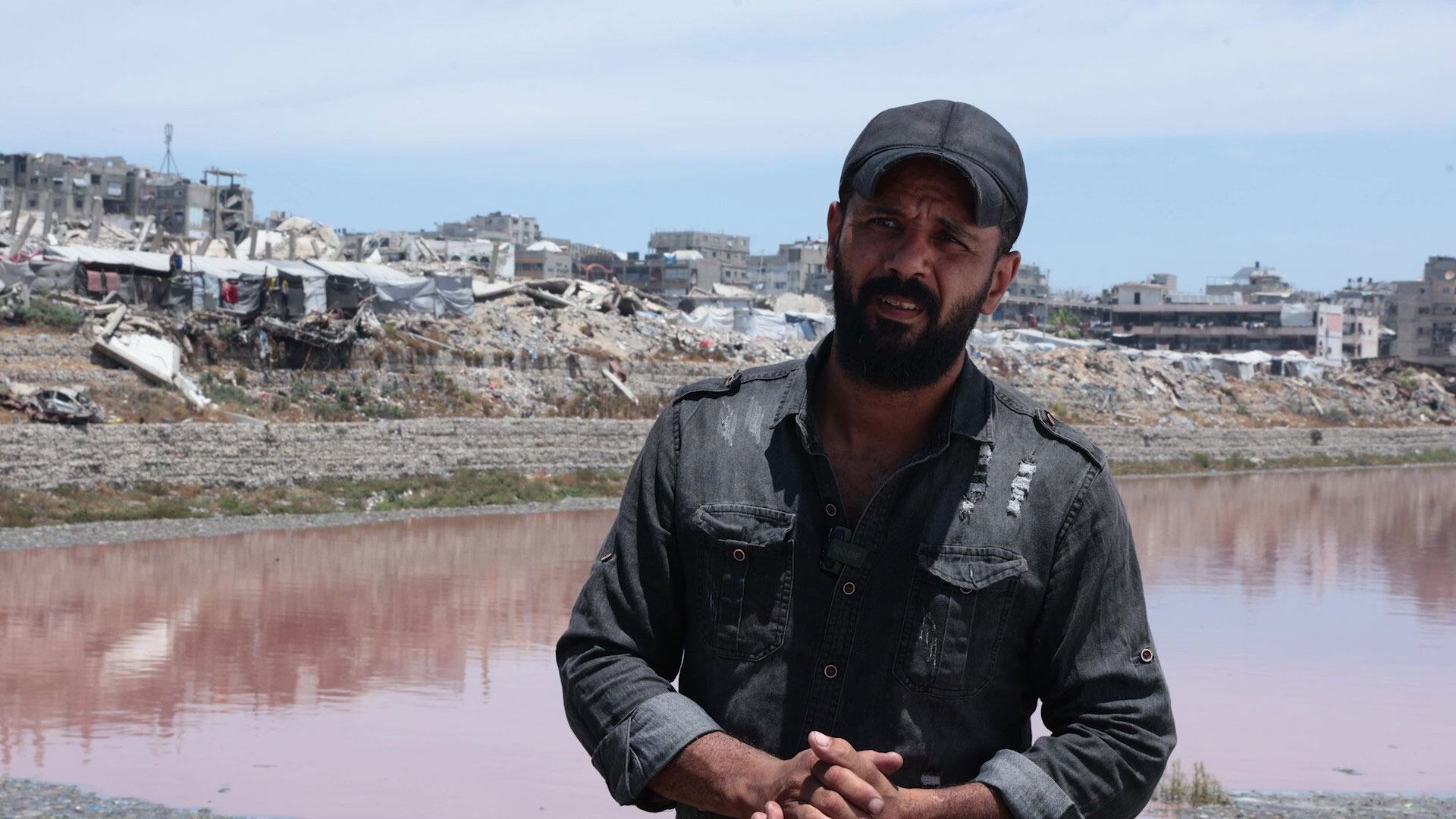
Overcrowding, pollution, and water shortages fuel the spread of diseases in Gaza
346
In a tent erected near a sewage treatment plant in the Sheikh Radwan neighborhood of northern Gaza City, Ikrami Jumaa says his family is no longer searching for a safe place, but rather for any space they can live in.
Ikrami Jumaa and his family have been displaced about six times before settling in an area besieged by sewage, stench, insects, and rodents. But he says moving is no longer a realistic option in a Gaza Strip where the space available to civilians has shrunk considerably, with most of the population concentrated west of what is known as the “Yellow Line”—an area that now encompasses the entire population of Gaza within a narrow, overcrowded strip.
“We couldn’t find anywhere else in the Gaza Strip,” said Ikrami Jumaa, a father of six. “We have no choice but to endure this place despite all the suffering. It’s not just the insects and reptiles; this environment spreads diseases. I suffer from heart disease, diabetes, and high blood pressure, and I can’t bear it, but we have no other option.”
Jumaa’s testimony reflects a crisis that extends beyond the deterioration of public health to the lack of geographical space that would allow displaced people to escape sources of pollution and infection. With tents crowded west of the Green Line, residents find themselves trapped between destroyed, restricted, or unsafe areas and overcrowded camps lacking basic water, sanitation, and hygiene facilities.
The UN says that most of Gaza’s population remains displaced in increasingly cramped and overcrowded spaces, while essential services are stretched beyond their capacity. The UN Office for the Coordination of Humanitarian Affairs (OCHA) reports that more than 70 percent of the population relies on water delivered by tankers, warning that funding shortages threaten the continuation of these supplies as the peak of summer approaches.