
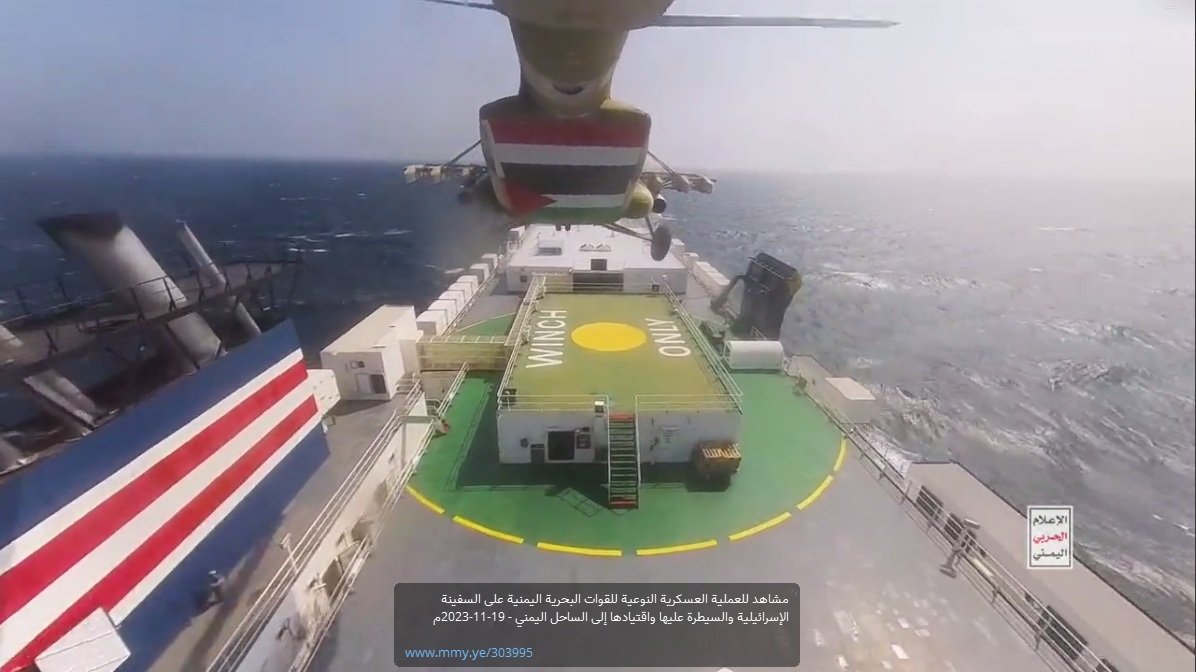
Yemen shatters American deterrence twice: How did Sana’a win the Red Sea battle?
Yemen has achieved an unprecedented feat in contemporary history, in a scene that redefined the balance of power in the region. It forced the US to withdraw from the Red Sea not once, but twice, in a naval defeat considered the most impactful since World War II.
Exclusive Follow-ups – Al-Khabar Al-Yemeni:
The first American operation, “Prosperity Guardian,” was launched during President Biden’s era (December 2023), aiming to protect the navigation of “Israeli” ships in the Red Sea, but it ended in a resounding failure. When Trump assumed the presidency and renewed the Zionist aggression on Gaza, he launched “Operation Rough Rider” (March 15 – May 6, 2025), relying on aircraft carriers, strategic bombers, and B-2 stealth aircraft for the first time, targeting three main governorates (Hudaydah, Sana’a, and Sa’ada). But the result was the same defeat, forcing Trump to “plead” with Oman to sign an agreement with Sana’a to end the aggression.
Washington sought in both operations to achieve key objectives: protecting Israeli navigation; halting Yemeni operations supporting Gaza; destroying Yemeni military capabilities (missiles, drones, and radars); and restoring the image of American deterrence shattered during Biden’s era. However, Yemen, which had prepared for the confrontation over decades, managed to absorb the strikes and use ballistic and winged missiles and drones in response to the aggression, achieving historic feats: the naval blockade on the Israeli entity remained in place, the ban on ships linked to the enemy was not lifted, strikes on sensitive targets in the occupied Palestinian territories continued, and a new equation unfamiliar to Washington was imposed: “America is the one asking to withdraw, not Yemen asking for a halt.”
The Biggest Surprise: America Abandons “Israel” in the Agreement:
The occupation entity was surprised by the humiliating American escape, as the agreement announced by Trump didn’t include protecting the navigation of the “Israeli” enemy, meaning Washington withdrew from its fundamental commitments towards its historical ally. This revelation showed two major weaknesses of the entity: its heavy reliance on American naval protection and its inability alone to secure navigation in the Red Sea, in addition to a growing realization that Yemen has become an actor that can’t be ignored or bypassed.
Despite Trump’s attempts to market the agreement as a victory, saying, “We received good news last night, as the Houthis announced that they no longer want to fight,” the decisive response came from the leader of the Ansar Allah movement, Sayyed Abdul-Malik Badr Al-Din al-Houthi: “This is farther from the eye of the sun… This is the impossible itself.” The battlefield proved that Yemen did not concede and that Washington withdrew humiliated, after depleting its numbers and latest munitions.
The deepest lesson in this battle is that Yemen didn’t win because of its newest missiles or fastest drones but because of the righteousness of its cause and because it was defending a just cause (Palestine). America, which gambled on its technological superiority, withdrew without achieving any of its objectives, dealing a painful blow to the reputation and standing of the US Navy, proving that any war America doesn’t resolve is a defeat for her by all measures.
Yemen’s victory in the Red Sea represents a major turning point in the history of the conflict with the American and “Israeli” project. Yemen, the besieged country, managed to do what entire Arab armies could not: to shatter the image of American deterrence and to impose new equations in the region. This had a significant effect in strengthening its alliance with the Axis of Resistance and preventing the exploitation of the Red Sea in any future aggressions.
Sana’a realizes today that the agreement with America is only a “temporary truce” and not a lasting peace. America will wait for the right opportunity to return. From this standpoint, it appears that Yemeni forces are on high alert to face any developments, according to what the leader of the Ansar Allah movement talks about in many of his speeches.