
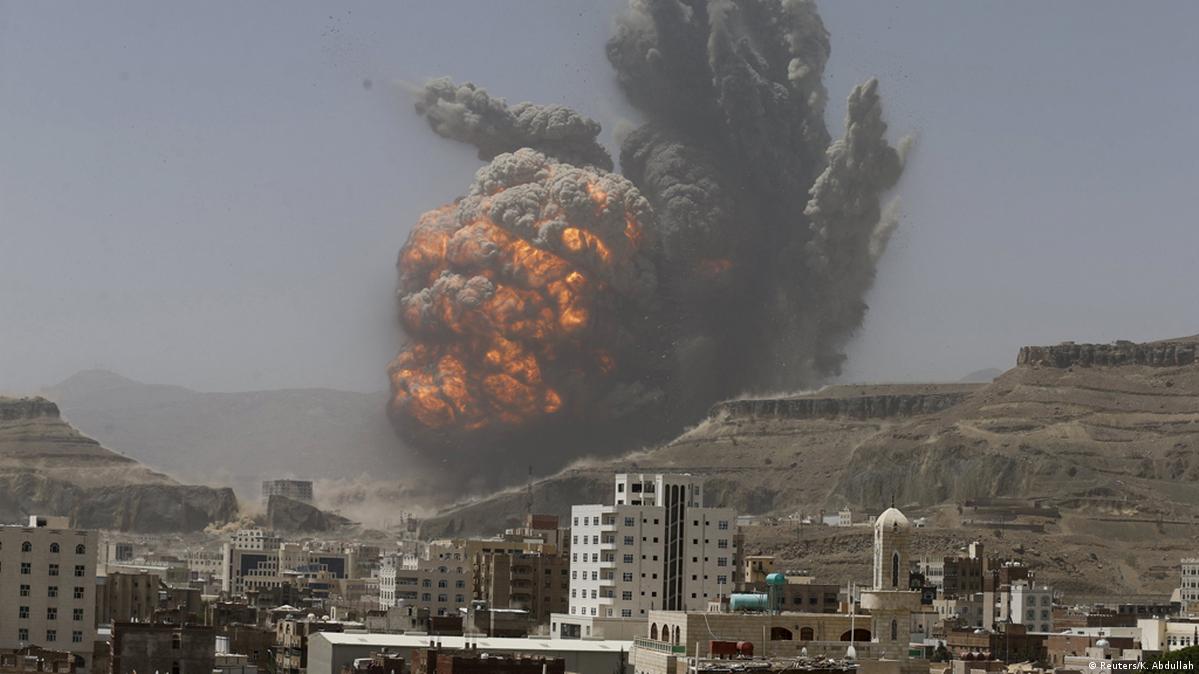
The war of accusations continues: Saudi Arabia throws the file of crimes into the UAE’s lap to evade responsibility
Report – Al-Khabar Al-Yemeni:
In an apparent attempt to evade responsibility for the war and its humanitarian repercussions, Saudi official media today directed new accusations at the UAE of being behind some of the bloodiest massacres witnessed in Yemen in recent years. This comes within a notable media escalation amidst the escalating disagreements between the two parties.
Saudi media outlets, in the latest episode of the exchange of accusations that began weeks ago, stated that Abu Dhabi was responsible for carrying out bloody attacks targeting Yemeni civilians and military personnel between 2015 and 2018, pointing to a number of prominent incidents, most notably:
* The Great Hall Massacre in Sana’a in 2016, which resulted in the fall of hundreds of martyrs and wounded during a collective condolence gathering, was one of the bloodiest incidents during the war on Yemen.
* The bombing of a children’s bus in Dhahyan, Sa’ada Governorate, in 2018, which sparked a wide wave of international condemnation due to the large number of civilian child casualties.
* The targeting of the residential Al-Muhandiseen City in Mocha in 2017, where dozens of civilians were martyred inside a residential neighborhood.
These accusations come amidst rapid developments since the beginning of last January, when disagreements between Riyadh and Abu Dhabi regarding military and political influence in Yemen erupted, leading to the UAE’s withdrawal from Yemen under direct pressure from Saudi Arabia, which opened the door to a mutual media campaign revealing the extent of the disagreements within the coalition that has been leading the war on Yemen since 2015.
In this context, Riyadh began directing a series of public accusations at Abu Dhabi, including talk of managing secret prisons and practicing torture and murder against Yemeni citizens, in addition to looting natural resources and targeting Yemeni national security through various means.
For their part, Yemenis viewed this media sparring between the two coalition parties as not absolving either side but rather constituting, in their description, a “damning indictment” of both Saudi Arabia and the UAE for what civilians were subjected to during the years of war.
They considered that the mutual confessions reveal the scale of violations that have been the subject of accusations by local and international human rights organizations for years.
Observers and human rights activists pointed out that Saudi Arabia blaming responsibility on the UAE represents a blatant attempt to evade the legal and moral burden of the war, confirming that Riyadh was the one that launched military operations in 2015 and led the coalition; the joint operations room was under complete Saudi control, and all airstrikes and bombing orders passed through it. Therefore, Saudi Arabia bears primary responsibility for all crimes, alongside the UAE as a principal partner in the operations.
They stressed that the violations committed against civilians in Yemen, no matter how long it takes, “will not expire with the statute of limitations,” and their files will remain open to international legal accountability amidst continuing human rights demands to prosecute those responsible for the crimes that have left behind one of the world’s worst humanitarian crises.