
Yemen: Towards comprehensive liberation and the restoration of wealth and full sovereignty
Ali Dhafer |
Recent developments in Sana’a and the governorates under the administration of the Supreme Political Council suggest a practical trend towards reshaping the priorities of the current phase, as the stalemate persists on the negotiation path and its outcomes without tangible progress. Recently, the themes of liberation, restoration of sovereignty, and wealth have emerged as a yellow card to the aggression coalition, signalling something more significant.
A New Phase: Declaration of Confrontation, Ending Occupation, and Restoring Wealth:
In his congratulations on the occasion of the new Hijri year (the 1st of Muharram, corresponding to July 16), the leader, Sayyed Abdul-Malik Badr Al-Din Al-Houthi, declared a new phase by calling for “cooperation in our country, officially and popularly, to confront the risks and challenges resulting from the comprehensive hostile targeting by the enemies against our dear people.” He considered that the continued aggression coalition’s “American-led, Saudi-executed” actions, including “occupying a large area of the country; controlling national wealth of oil and gas; violating the country’s sovereignty and independence in every way; imposing siege and a comprehensive economic war against our people; mobilizing takfiris and mercenaries to kill and target the lives of our Yemeni society; and all forms of conspiracies,” are sufficient justifications and reasons that “necessitate the unification of efforts, seeking God’s help, trusting in Him, and striving to end the aggression, occupation, and siege.”
That this call comes with such a sharp tone indicates there are reasons to justify it after four years of the “de-escalation” phase, which has been marked by prolonged strategic patience from Yemen and extensive diplomatic efforts through direct and indirect negotiations, public and unpublicized meetings, and communications to reach a final, just, and comprehensive agreement ensuring Yemen’s sovereignty and independence and the rights of its people. However, the Saudi-American aggression coalition met all of this with two parallel paths: procrastination, stalling, and treading water at the negotiating table without seriousness or resolution, alongside a dangerous escalatory path of a complex security, economic, humanitarian, and other war.
On the ground, the ironic paradox is that Washington and Riyadh have repeatedly tried to assume the role of “mediator” and absolve themselves of responsibility and all the consequences of their aggression and comprehensive siege. In politics, media, and propaganda, they went to cement the narrative that everything that happened in Yemen—fragmentation, destruction, killing en masse and individually, and siege for 11 years—was the product of a “Yemeni-Yemeni conflict,” attempting to impose this narrative as a permanent fait accompli, even though the Yemeni parties under the aggression coalition do not own their own affairs nor even their movement and establishment decisions. They are nothing more than temporary tools being used and rotated from time to time and from one form to another to cover the aggression coalition and achieve its agendas, plans, and ambitions in Yemen.
The People to the Leadership: We Are at Your Command:
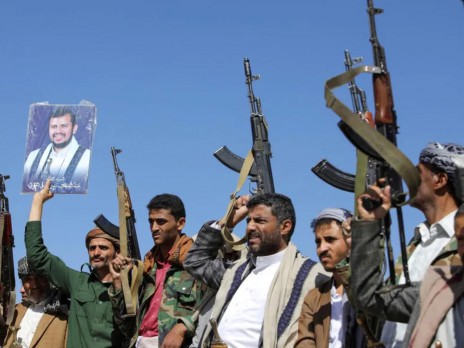
The leadership’s call in mid-July constituted a national strategy and an announcement of a new phase of conflict, blessed by the three authorities and national forces and widely received by the majority of Yemenis. This response is embodied in the state of armed tribal mobilization across all governorates, and the declaration of the mobilization forces’ readiness to implement and support any military or political options decided by the leadership in light of current local data and the changes witnessed in the region and the world.
The state of response, mobilization, and general alert are explained by the fact that most Yemenis have been burned by the fires of Saudi-American aggression for 11 years and are still enduring its consequences and the resulting harsh economic war and unjust, ongoing siege. The call came to meet the people’s aspiration to exit this dire reality.
The overall trend also reflects Sana’a’s disappointment and dissatisfaction with the outcomes of the “de-escalation” phase, which was characterized by escalation without bullets or raids, as if it were a transition from military aggression to a relentless complex war.
Possible Scenarios:
There are several possible scenarios for the coming period. The first is that the Yemeni pressure escalation in the face of comprehensive external pressures might lead to a full-scale confrontation. This scenario is based on the premise that all political paths have failed with the continued state of stalemate without resolution, thus moving towards wider confrontations related to sovereignty, wealth, and foreign military presence (occupation).
The other scenario is a pressure escalation without a full-scale confrontation but rather to push towards a more serious negotiation path. This scenario is based on the premise of using unspecified pressure tools to force the aggression coalition to move towards tangible, comprehensive, and just solutions to outstanding files, most notably ending the economic war and siege; ending the Saudi occupation of 60% of Yemen’s area; and ending foreign control over national wealth resources, reconstruction, compensation, reparations, and so on.
Priorities of the Phase:
Recent developments suggest Sana’a’s trend to reshape the phase’s priorities in light of the persistent stalemate governing the negotiation path and the lack of tangible and decisive progress in economic, humanitarian, and other files. The emergence of the themes “ending the occupation, aggression, and siege” and “restoring national sovereignty and wealth from oil and gas” as main headings for the phase suggests the possibility of moving from the strategic waiting phase to more impactful and effective options on the regional and international parties involved in the aggression and siege by imposing new equations on the ground by taking advantage of regional and international variables, with the aim of drawing rules and establishing new equations.
National wealth and full sovereignty remain at the heart of the conflict or solution equation, awaiting the outcome of the scene’s progression and developments.
Source: “Al-Mayadeen Net”