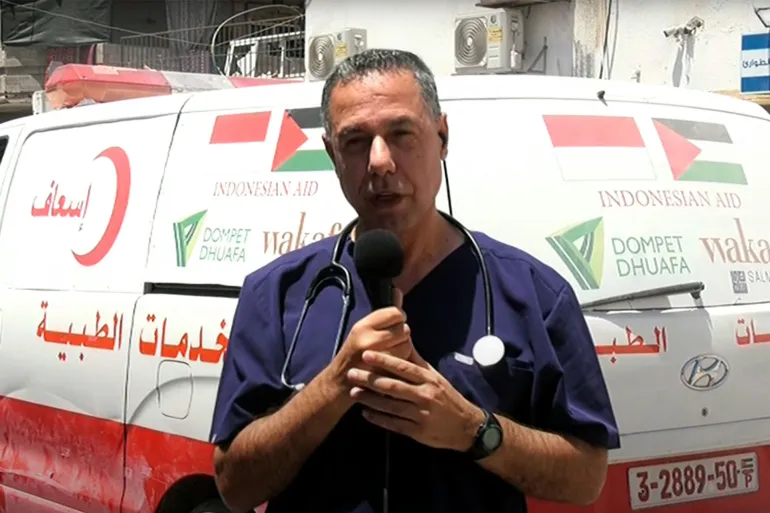
Abu Safiya, Al-Hams, and 730 medical personnel are being tortured in Israeli prisons
1,194
Amidst loss and longing, the families of doctors Hussam Abu Safiya and Marwan Al-Hams live. While the first misses her son’s presence and the laughter that used to fill their home, the second finds solace in hanging his picture above the tent pole of the shelter they now live in, so that the head of the family remains present despite the distance and imprisonment.
Both doctors were renowned in the Gaza Strip for their humanitarian work treating the sick and wounded during the genocidal war launched by Israel on Gaza on October 7, 2013, which lasted two years.
They shared the suffering and continue to endure the pain of imprisonment in Israeli jails, where the occupation has spared no effort in torturing them and making their lives miserable, as is the case for thousands of Palestinian prisoners.
The family of imprisoned doctor Hussam Abu Safieh is experiencing a loss that goes far beyond his physical absence. Since his arrest on December 27, 2024, they have been unable to cope with the void he left in their home, nor with the absence of the figure who provided them with their daily balance. His arrest shattered the peace and stability that his presence brought, as his son Elias explains, adding, “We lost the spirit of our home, its laughter, its security, and his advice and guidance, which saved us years of hardship.”
After a 60-day hiatus, according to Elias, the family received a call on Tuesday informing them of a court hearing scheduled for a few days later. However, there was no clear information about his father’s health, and he is being denied visits from lawyers under the pretext of security concerns, further increasing anxiety about his fate. While there is widespread support for his father’s case, Elias believes that concrete steps are needed to exert pressure to determine his fate or at least improve his detention conditions.
Abu Safiya remains present in the minds of his children as a doctor known for his resilience. He continued his work even after the martyrdom of his son Ibrahim, enduring a leg injury himself, and was seen in a scene advancing resolutely towards an Israeli tank. His friends who were with him at Kamal Adwan Hospital affectionately call him “the father of the sick.”