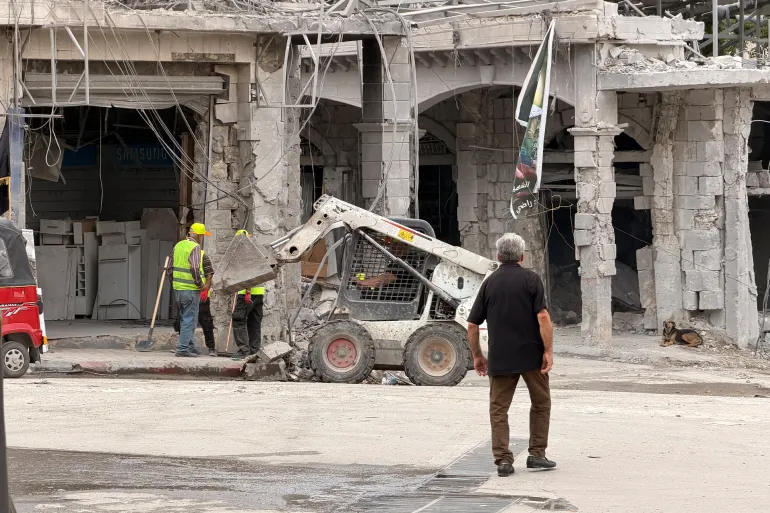
Volunteers raise the rubble of Nabatiyeh in southern Lebanon
472
Young Khalil bends over the sign of a destroyed shop, carefully picking up shards of glass and sweeping the floor with measured movements, as if trying not to reawaken the memory of the place. He raises his head occasionally to wipe the sweat from his brow, then returns to the same rhythm, without pause, in a scene that encapsulates the profoundly delicate relationship between people and what remains of their city.
From one end of the commercial street, the scene might appear simple on the surface, but it bears the weight of what the war left behind in Nabatieh, a city that has just emerged from a different era: shopfronts riddled with holes from Israeli airstrikes, shattered glass gleaming in the sun like the lingering remnants of an explosion that never truly left, and rubble scattered on the sidewalks as if still holding the heat of the initial blast, a testament to a time that has yet to find peace.
Amidst this heavy scene, another day begins, unlike any before. The sounds of picks and brooms replace the silence, and many feet move through the alleyways as if trying to rearrange the place anew. Dozens of volunteers arrive one after another, carrying simple tools: gloves, shovels, brooms, and large black bags, but what they are actually carrying is much bigger than that; an attempt to open a path to life inside a city that has not yet left the shadow of war.
In the same place, groups of volunteers are distributed from different backgrounds: university students, lawyers, engineers, workers, and women. They are not united by a single appearance, but they are united by one act that is repeated with a calm rhythm: raising the rubble and opening the roads. The work is not just a logistical task, but a position on the city, and the idea of its survival.