
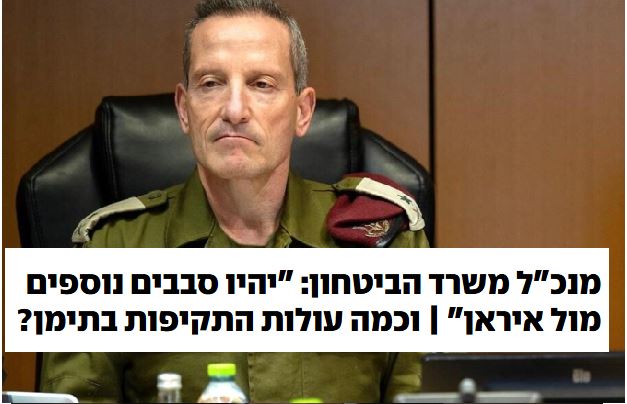
The Israeli Ministry of War reveals the enormous financial drain that the Yemeni front is imposing on the entity
An Israeli official revealed the extent of the huge drain that the Israeli enemy is suffering on the Yemeni front, confirming that the confrontations are costing huge amounts of money and enormous human and material resources.
Translations and exclusive follow-ups – Al-Khabar Al-Yemeni:
The so-called Director General of the enemy’s Ministry of War, Major General Amir Baram, said that wars require reserve soldiers, ammunition, and rehabilitation for the wounded, noting that the financial cost of the confrontation is remarkably high.
He added that the enemy’s administration is preparing to establish a “Supreme Council for Armament” to accelerate preparations for upcoming rounds with Iran and Yemen, reflecting Tel Aviv and its allies’ efforts to expand the circle of conflict rather than calm it down.
The official revealed that assaults on Yemen cost the enemy an average of about 50 shekels per operation, while the price of a Hetz 3 missile ranges between 15 and 30 million shekels, and that a single mistake could cause damage estimated at about 300 million shekels.
The figures show that the enemy is forced to launch large groups of expensive interceptor systems, including Arrow, THAD, and Iron Dome, to try to repel advanced Yemeni missiles, especially the upgraded Palestine 2 missile, which carries multiple fission warheads.
These missiles have proven their effectiveness in the last three operations, forcing the enemy’s systems to deplete their financial and operational reserves, destabilizing the home front, forcing millions to stay in shelters, disrupting airport traffic, and creating significant economic and military fatigue.
The data confirms that hypersonic missiles and locally manufactured drones are a strategic pressure tool capable of having a significant impact even if not all missiles reach their final targets, because the cost of interception and the psychological and economic consequences become part of the deterrence equation imposed by the targeted parties.