
Closure of the Strait of Hormuz after the assassination of Khamenei… What are the repercussions and potential scenarios?
The decision by the Iranian Revolutionary Guard to close the Strait of Hormuz following the American-Zionist assassination operation against the Iranian Supreme Leader, Ali Khamenei, last Saturday represents a radical shift in the geopolitics of the Middle East region. It will have economic and geopolitical repercussions, foremost among them placing global energy supplies in the face of an unprecedented shock.
Exclusive – Al-Khabar Al-Yemeni:
In this report, we will attempt to highlight the most significant economic, security, and geopolitical repercussions of the event, as well as review potential scenarios for the future of the conflict and the status of the strategic strait, based on its strategic and economic importance, as follows:
First: The Strategic and Economic Importance of the Strait:
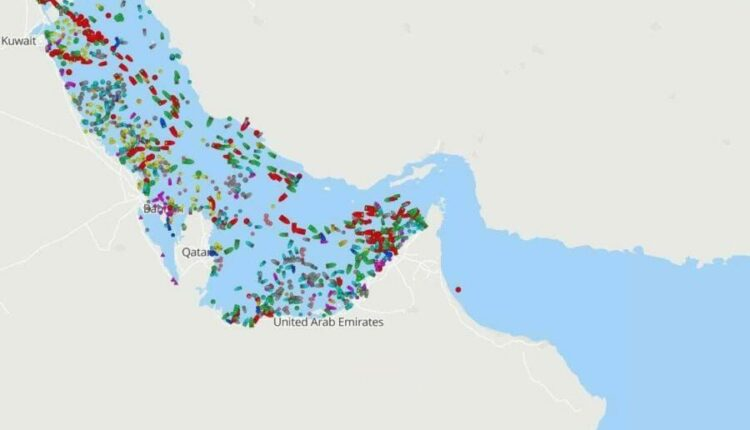
The Strait of Hormuz is considered the most important “bottleneck” in the international energy system. Figures from the years 2025 and 2026 highlight the weight of this passageway:
– Flow Volume: An average of 20 million barrels per day of oil and condensates pass through the strait, equivalent to roughly one-fifth of global oil consumption.
– Liquefied Natural Gas (LNG): Approximately 20% to 25% of global LNG trade transits through it. Qatar relies almost entirely on it to export its production.
– Navigation Density: About 3,000 ships cross it monthly, at a rate of one tanker every 6 to 11 minutes.
Second: Immediate Economic Repercussions:
The closure has led to violent economic reverberations, manifested as follows:
– Oil Prices: Prices surged in unofficial trading by 8% to 10%, amid expectations that Brent crude could reach levels between $120 and $150 per barrel if the closure continues.
– Shipping and Insurance Costs: The cost of chartering large tankers bound for Asia rose to exceed $200,000 per day, with a steady increase in war risk insurance premiums reaching 50%.
– Supply Chains: Oil and fuel shipments by major global companies were halted based on the “war clause” in legal contracts (Al-Quds Newspaper, 2026).
Third: Geopolitical and Security Repercussions:
– Exposure of Asian Powers: China is the largest importer via the strait at 32%, followed by India (18%) and Japan (9%), placing these powers before a severe energy security crisis.
– Limited Alternatives: Despite the existence of alternative pipelines such as the “East-West” line in Saudi Arabia and the Fujairah port, they can only accommodate a small portion of the lost volumes, making it impossible to compensate for the entire shortfall in the short term.
– Regional Escalation: Fears have increased of the region sliding towards a comprehensive confrontation involving the US, Israel, and Iran, threatening the stability of other waterways such as the Suez Canal.

Fourth: Expected Future Scenarios:
1. The “Rapid Containment” Scenario: International parties (such as China or Russia) intervene to mediate the reopening of the strait in exchange for security guarantees, which could bring prices back to the $90 level.
2. The “Naval Attrition War” Scenario: Continued partial closure and targeting of ships, leading to severe global inflation and a collapse in economic growth rates, with oil reaching $160.
3. The “Major Confrontation” Scenario: International military intervention to break the blockade by force, potentially leading to the destruction of oil infrastructure in the Gulf and a halt in supplies for many months.