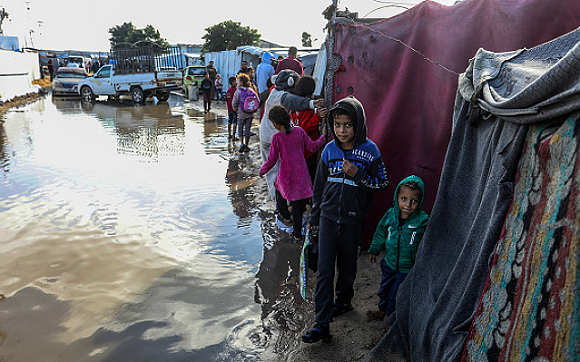
The collapse of Gaza’s transportation system forces alternative routes
259
The widespread destruction of infrastructure in the Gaza Strip during the ongoing war has led to a near-total collapse of the transportation system, forcing residents to develop informal alternatives that have reorganized movement and economic and social activities.
An analytical study published by the Palestinian Center for Policy and Survey Research revealed that the destruction of roads, vehicles, and transportation networks, coupled with a severe fuel shortage, has paralyzed traditional modes of transport and caused an unprecedented decline in their operational capacity. This has made daily commuting extremely difficult, costly, and dangerous.
The study explained that this collapse has not brought life to a standstill, but rather has given rise to what it termed an alternative “mobility economy.” This economy relies on simple and informal means of transportation, such as handcarts, horse-drawn carts, bicycles, animal-drawn carts, tuk-tuks, and trucks used for public transport.
She added that these transformations were not limited to the service sector, but extended to the economic and social structure, with the emergence of new professions linked to alternative means of transportation, coupled with a significant increase in transportation costs. This exacerbated the burdens of daily life and deepened the gaps in access to basic services.
The study indicated that transportation has become a crucial element in the distribution of food and humanitarian aid, as access to basic necessities is now contingent on individuals’ ability to afford transportation costs, amidst a severe liquidity crisis and a marked rise in transportation prices.
The study concluded that this reality represents a forced model of societal adaptation in the face of collapse, reflecting the population’s capacity for innovation, but it remains fragile in the absence of infrastructure capable of ensuring safe and equitable movement.
It called for urgent intervention to reorganize the transportation sector within a comprehensive reconstruction plan, guaranteeing the restoration of the right to freedom of movement as a fundamental component of humanitarian and economic recovery in the Gaza Strip.