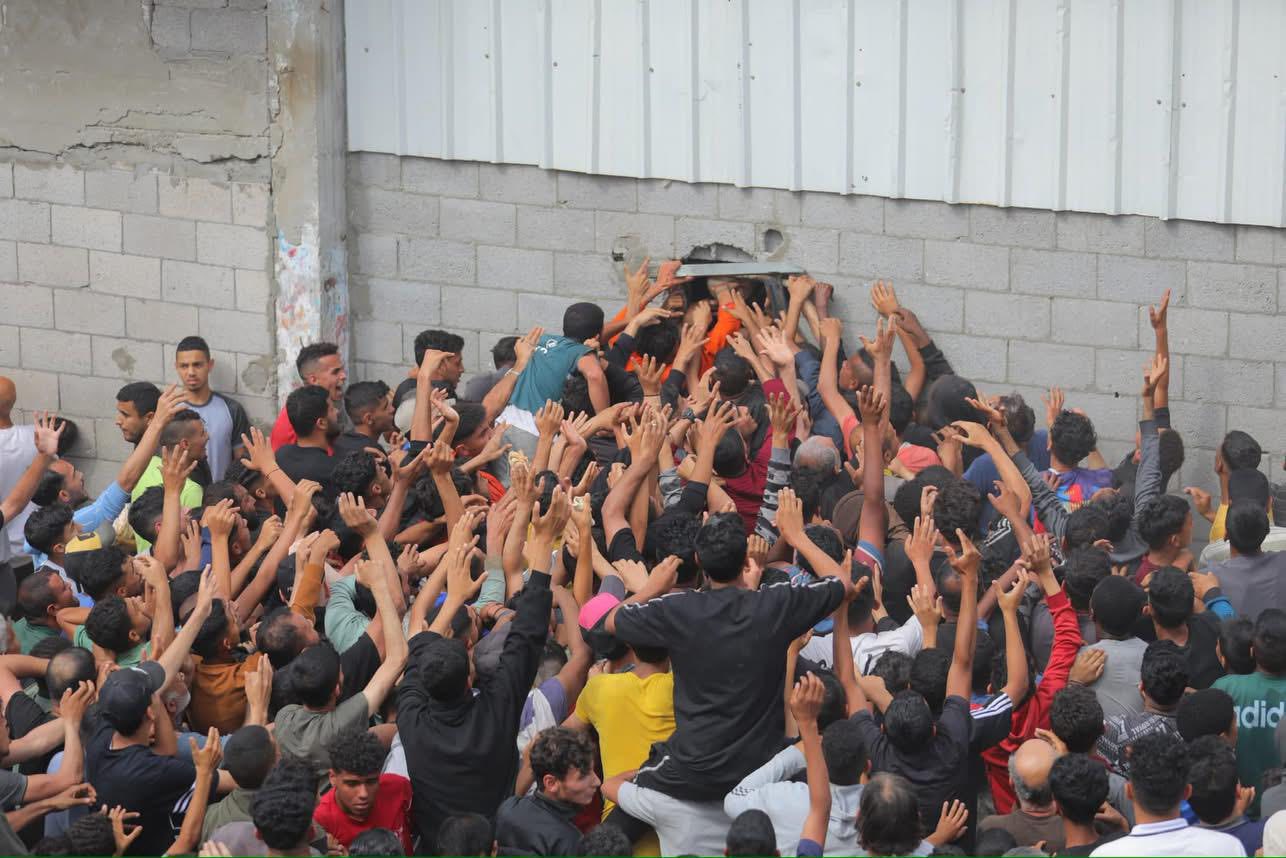
bread crisis has resurfaced in the Gaza Strip, imposing a harsh daily reality on residents who queue from dawn in front of bakeries and distribution points—a scene that has become a daily occurrence. This comes amidst a severe shortage of flour and fuel, and strict restrictions on the entry of supplies through the crossings.
Across the Gaza Strip, citizens stand in long lines waiting to obtain a bundle of bread, amidst anxiety and tension due to the limited quantities.
One citizen, queuing at a distribution point for bread subsidized by the World Food Programme north of the Nuseirat refugee camp, said, “I go out right after dawn prayers to secure my place in line, hoping to get one bundle that weighs no more than two kilograms. Even then, I might return home without any bread.”
Um Luay, a mother of four orphaned children, told a reporter from the Palestinian Information Center, “Our lives have become tied to bread. If we are a little late, we lose our place in line, and if we arrive late, we don’t find any bread at all.” Citizens’ complaints weren’t limited to supply shortages; they extended to the policies of some international organizations, most notably the World Food Programme (WFP). Many believe that the reduction in support has exacerbated the crisis.
The crisis stems from a decline in the quantities of flour and fuel entering the Gaza Strip due to restrictions imposed on border crossings, which has led to a significant decrease in bakery production.
According to local data and media reports, daily bread production has fallen from approximately 300 tons to only 200 tons as a result of reduced flour and diesel supplies to bakeries.
Official estimates indicate that what enters the Gaza Strip does not meet the minimum actual needs, given the ongoing restrictions on the flow of trucks, which is worsening the basic food crisis.
Furthermore, the policies of some international organizations, particularly the WFP, have played an additional role in complicating the crisis. The WFP’s reduction of subsidized flour and diesel supplies to bakeries by up to 30% has led to decreased production and increased pressure on the market. It is no longer a secret that the program is moving towards reducing the subsidized bread system and gradually shifting towards a commercial system, further burdening citizens amidst declining purchasing power.
The aforementioned factors combined have led to unprecedented price hikes in bread and flour. The price of a bundle of bread has risen from the subsidized price of 3 shekels to between 7 and 15 shekels on the open market, while the price of a 25-kilogram bag of flour has jumped from approximately 20-25 shekels to 70-100 shekels.
This sharp increase has made bread, a staple food for most families, a daily burden beyond the means of many.
As the crisis worsens, the black market has resurfaced, where limited quantities are sold at inflated prices, exploiting the supply and demand gap.