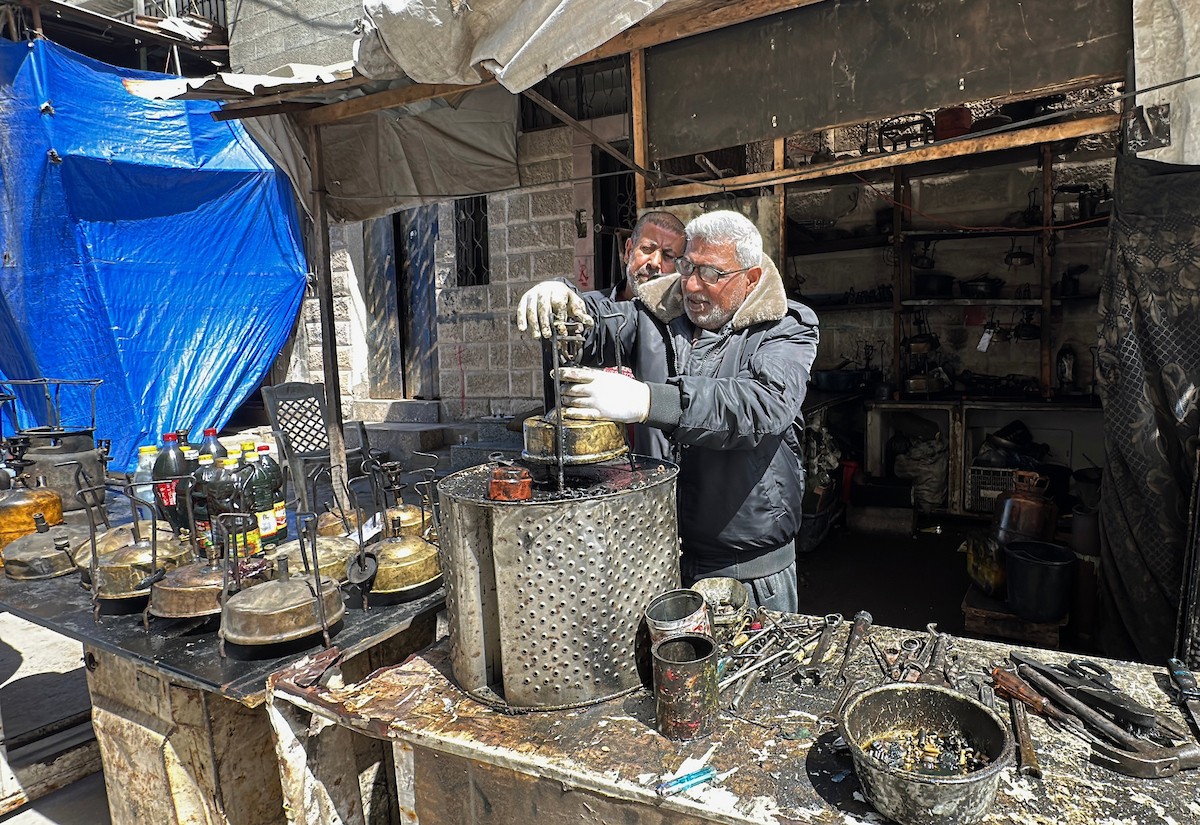
The kerosene stove, or “babour,” has returned to a central place in the lives of Palestinians in the Gaza Strip, serving as a traditional alternative to cooking and heating gas. This comes as the Israeli blockade continues, preventing the entry of fuel and gas amidst a worsening humanitarian crisis. The situation has taken Palestinians in the Strip back 70 years, to the days of the Nakba and even earlier.
In an alley in the Shati refugee camp west of Gaza City, Adel Issa, 63, stands for long hours in his small workshop, repairing old kerosene stoves that have resurfaced due to the cooking gas shortage and the scarcity of other energy sources.
Issa, who has worked in this field for over 30 years, confirms that the kerosene stove was once just a hobby or a job with limited demand, but today it has become a daily necessity for thousands of families. He says his workshop receives dozens of Palestinians daily who want to repair stoves they neglected before the war but now need. However, he can only repair about 10 stoves a day due to the severe shortage of spare parts, which have become almost nonexistent as a result of restrictions on the entry of basic materials. He points out that even the simplest maintenance supplies are unavailable, hindering his work and exacerbating people’s suffering. With the absence of cooking gas, residents of the Gaza Strip have been forced to resort to firewood, cardboard, and even alternative fuels extracted from plastic waste—methods that pose significant health risks.
Issa notes that the “babour” (a type of kerosene stove) relies on diesel fuel, also known as white kerosene, which is itself harmful and unhealthy, but remains less dangerous than other alternatives.
He emphasizes that many Palestinians do not have a stable income that would allow them to purchase fuel, especially given the widespread unemployment, making securing even the most basic daily necessities a daily challenge.